How to Pull off an Epic Volunteer Retreat

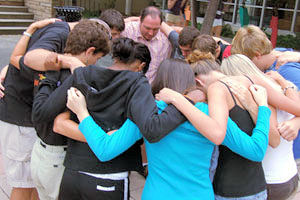
When it comes to pulling off an epic volunteer retreat, the key is understanding what it is that you want to accomplish.  Over the years, we’ve honed our focus down to three things. We want our volunteers to walk away from the retreat feeling connected, inspired and valued.  Our retreat is all about connecting volunteers to each other and to God, inspiring them to become the best volunteers they can be and valuing them for their uniqueness and their investment.

A KILLER THEME

We happen to believe that fun is spiritual and that taking the time to meticulously plan out a fun experience communicates value to our volunteers.  The key element of fun for us this year was our 80s theme.  Everyone came to the retreat dressed like it was 1983.  The soundtrack from the weekend was exclusively from the 80s.  All the games, prizes, decorations and snacks were from the 80s.  This theme added an incredible amount of fun and structured fun communicates value.

SONY DSC

COMMUNITY

Our goal is to weave community into every aspect of our volunteer retreat because we believe that volunteers who serve in community are better volunteers.  Because of this, we ask our cell families (teams of volunteers) to carpool and eat dinner together on the way to retreat.  We house each cell family together and build in cell family discussion in response to each session.  Aside from these elements, we believe that the very nature of getting away together as a community of leaders, staying up late playing volleyball or Setters of Catan, and eating meals together builds community.

GUEST SPEAKER

In our ministry context, we train our volunteers every other week.  Our volunteers hear from us a lot.  Because of this we will often bring in a guest speaker for our retreat simply because they bring fresh stories, language and perspective to the conversation.  This year we asked Brian, our Senior Pastor of Family Ministries and Ian Nacy, a local youth pastor to come and inspire our volunteers.

CONTENT THAT COUNTS

If you’re going to take the time to get your volunteers away, you should make it worth their while.  You need to communicate something valuable.  This year, our schedule included 3 sessions–two on Saturday and one long session on Friday night which included a 40 minute worship set.  If the retreat is all “fun” elements, your volunteers will be asking why they needed to come in the first place.

Here’s our schedule if you’d like to see it:  Retreat Schedule

THE VALUE PLAN

There are two ways to do a retreat.  There is the, “we have $5 to make this happen because we didn’t plan for it” and there’s the “we’re going to pull of an epic experience for our volunteers.”  We’ve found that it’s the little things that communicate value.  Choose a camp with nice facilities.  Tell the camp what meals you’d like to eat so you don’t end up with cafeteria corn dogs for lunch, bring great snacks, give away something big, put care into the programming elements and for crying out loud, don’t make your volunteers serve on their retreat.

LEAVE THEM WANTING MORE

In my opinion, one of the most important elements to a good retreat is when you end it.  It’s always tempting to try to do too much and keep your volunteers for too long.  We’ve struggled with finding this balance over the years but we’ve landed on this truth:  It’s always best to leave them wanting more.  If they can’t wait to come back next year then we’ve nailed it.

We start our retreat at 7:00 on Friday night and end it at 2:30 on Saturday afternoon.  It may seem to short but we don’t feel the need to cram hours of training into our volunteer retreat because we already train our volunteers every other week.


So, the key to an epic volunteer retreat is understanding what you want to accomplish.  For us, it’s all about connecting, inspiring and value.  What’s your goal and how do you achieve it?



Why Your Ministry Needs a Volunteer Retreat

Last weekend was our 17th annual volunteer retreat.  Ok, I actually have no idea how many retreats we’ve done but 17th annual has a nice ring to it.  Here’s the thing, of all the things we do in our student ministry, I believe that our volunteer retreat is in the top 3.  It’s crucial to our culture.  I can’t imagine not doing it next year and here’s why you should be putting one on too.

YOU NEED GREAT VOLUNTEERS

This year we set a new LifeLine record with 116 small groups so yes, we have a bunch of volunteers.  But here’s the thing, if you have more than 12 students, you need small groups and if you need small groups then you need volunteer leaders.  Not only do you need volunteers but you need great volunteers.  You need the kind of volunteers that you can trust to be spiritual shepherds to our students.  And, not only do you need great volunteers, you need great volunteers who will serve year after year because student ministry is a long-term investment.

So, how do you end up with great volunteers who stay engaged for the long-haul?  You invest in them.  A volunteer retreat is an incredible opportunity to invest deeply in your volunteers.  Here’s how it works.

VALUE

Here’s what I know:  volunteers who feel valued stay engaged in our ministry.  When volunteers understand, not only that we need them but that we enjoy them as people and value their individual gifting they tend to stick around.  We use our volunteer retreat to to create space for value conversations.  There is so much more that can be said on a weekend.

FUN

Volunteers who have a great time serving in student ministry tend to stay in student ministry.  If our volunteers are bored then we are seriously missing the mark.  We treat our volunteer retreat like a party.  Last weekend’s retreat included loud music, big prizes, crazy costumes, interactive games and hilarious videos.  If it isn’t fun you aren’t doing it right and your volunteers will likely go find someplace fun to serve.  Conversely, we’ve found that volunteers who have fun serving in our ministry stay engaged year after year.

SKILLZ

Nobody likes to suck at stuff.  This is a fundamental principle of humanity.  Student ministry is not an easy gig.  Leading a small group can be terribly difficult.  Volunteers who don’t feel like they are doing a good job will rarely stick around.  It’s our job as ministry leaders to equip them because volunteers who feel competent stay engaged.  We train our volunteers every other week but there is something special about getting away together on a retreat to really dig into core training concepts.

COMMUNITY

We are all hungry for community.  We believe that volunteers who have strong community make better spiritual shepherds for our students.  Some ministries require that their volunteers find a solid community, we build it right into our structure.  We have found that volunteers who connect deeply with other volunteers tend to stay engaged in our ministry for years.  For us, this is the biggest win of a volunteer retreat.  A weekend creates a ton of space for connecting.

GO AND DO

So, what’s the bottom line?  You should do a volunteer retreat!  Why?  Because we need great volunteers who stay engaged for years.  Volunteers who stay engaged feel valued, have fun, feel competent and serve in community.  A volunteer retreat is a great opportunity to invest in volunteers in each of these areas.

Tomorrow I’ll share some ideas on exactly how to pull off an epic retreat.

3 Levels of Belonging

Our student ministry does something that I believe is rather unique.   We call it cell family and we stole the idea wholesale from a church across town about a decade ago.  They stopped doing it years ago and we’ve been dumb enough to stick with it.  And yet, we’ve come to love it and it’s become an indispensable part of who we are as a ministry.  What exactly is cell family? I’m glad you asked.

ONE EPIC NIGHT OF AWESOMENESS

Our high school ministry meets on Sunday nights.  We built our ministry around small groups and we’re one of those student ministries that attach our small groups to our programming.  In other words, we pack everything into Sunday nights:  hang out, games, worship, teaching and small groups.  We always leave the last 30 minutes of our night to small groups.  We believe this is the best model for student ministry for a variety of reasons but we can argue about that in another post.

CELL FAMILY

What makes us unique is that every other week we meet in homes.  Instead of meeting all together with all of our students and volunteers, we meet in regional homes based on school.  We don’t add another night of programming, we do cell family in place of our regular large group programming.  Sound like a logistical nightmare?  It is.  But to us, it’s worth it.

THREE LEVELS OF CONNECTION

There are a few reasons we believe this model is strategic. First off, we believe that students need to know and be known.  Our dream is that students would know be known by ten adult volunteers (each cell family has 10 volunteers in it).  These volunteers know each student’s name and basic story.

We also want each student to experience three levels of belonging.  We want them to belong to something big.  There is something special about worshiping together with hundreds of people.  We also want our students to belong to something small.  Small groups are the place where they can be vulnerable and real.  It’s the environment in which they can be cared for and led by an invested adult.

Lastly, we believe our students need to belong to something midsize.  We believe that there is something valuable in 30 or 40 people in a house.  It feels a bit like a family reunion.  It’s a support network.  It’s a place where younger students can observe the faith of older students and where volunteers can show students what healthy relationships look like.  It’s a place for students to try out their gifts and talents and it’s a place where they can have a voice.

INTERACTIVE TEACHING

Cell family is also a response to how students learn.  We believe that students retain information best when they are able to interact with it as it is presented.  In our cell families, we teach through discussion rather than preaching.  Instead of a 20 minute presentation, we produce a 7 minute teaching video that leads into a group discussion.  We believe this model of communicating better fits how our students learn.

SERVE AS A FAMILY          

The last and perhaps most important reason we do cell family is volunteer community.  We believe that volunteers are at their best when they are serving as a family.  Each cell family is composed of 6-8 small group leaders and two volunteers that oversee the cell family.  These “coaches” as we all them have two roles:  care for their small group leaders and oversee the cell family programming.

Each time we meet in cell family, the volunteer team meets an hour early and has dinner at the cell family home.  Over time, the combination of these meals and serving together leads to fantastic volunteer community.  We want our volunteers to feel supported and together and cell family is a huge reason why we’re able to achieve this.


Volunteer Pep Talk | Growth

It’s Wednesday night and you’re attempting to lead your small group.  As you look around, two small groups are deep in prayer and one is passing out tissues because Sally is pouring her heart out.  You’re startled back to reality by a flash across your field of vision as Billy catapults himself off the top of a nearby couch and drops a well placed elbow into Johnny’s lower back.  Yes, this is your small group.  While the groups around you are engaging in community and discipleship, your group is engaged in a WWE cage match…again, just like they do every week.  And you ask yourself, “Why am I even here?”

This week, I’m blogging about and for student ministry volunteers.  Here’s yesterday’s post, if you’re interested.

Sometimes, actually many times, it doesn’t feel like we are getting anywhere with students.  In these moments it’s important to remember what we’re called to do and what we’re not called to do.  In these moments, a little gardening tip can keep us sane.

SEEDS AND WATERING CANS

As we think about leading students this year, there is a principle found in 1 Corinthians that has kept me sane in many difficult moments in student ministry.  Check it out:

“I planted the seed, Apollos watered it, but God has been making it grow.  So neither the one who plants nor the one who waters is anything, but only God, who makes things grow.  The one who plants and the one who waters have one purpose, and they will each be rewarded according to their own labor.  For we are co-workers in God’s service; you are God’s field, God’s building.”                              (1 Corinthians 3:6-8)

Paul is describing the growth of the Christians in Corinth.  He was the one who planted the seeds.  He preached the Gospel to the people in Corinth.  For most, he was the person who introduced them to Jesus.  Then, Apollos came and taught them more about what it looks like to follow Jesus.  They grew and became more established under Apollos’ teaching.  And yet, Paul acknowledges that while they both had critical roles, God is the one who made the people grow.  Paul and Apollos were simply being faithful to their calling.

OUR ROLE AND GOD’S ROLE

As much as we try in student ministry, we cannot cause growth.  Only God can do that.  We can only be faithful with the roles that God has given us.  I love this. There is freedom and clarity here.  I can build relationships.  I can pursue students.  I can speak truth and I can love students well.  But, I cannot produce the results.  I cannot make a student grow.  That’s God’s role.

So this year, be a great small group leader.  Mentor your students.  Love them well and show them how to follow Jesus.  As you do these things, remember that it’s God’s role to make them grow.  Plant seeds like crazy and go nuts with the watering can.  Do your very best to love students and draw them into what Jesus is doing in and around us.  But, at the end of the day, breath a sigh of relief because, ultimately, it’s God’s role to make students grow.  All you can do is be faithful.

To Our New Volunteers

It’s September, that means it’s time to launch our student ministry.  This week I’m focusing my blog on volunteers.   Here’s what I shared with our brand new volunteer small group leaders last Wednesday night…

Sometimes you guys make me mad.  I’ll be honest, sometimes I get a little jealous.  Why?  Baptisms.  Yeah, that’s right.  Baptisms.  You see, when we do baptisms in high school, our students share their faith stories and talk about the influential moments along the way.  You know what they never say?  They never say, “I really remember this one time when Aaron was teaching and he said ….”  They never say that, because they basically never remember ANYTHING we say from the stage.  They really don’t.  It’s kind of depressing actually.

You know what they do say at baptism night?  Standing there in the hot tub they unfold their papers and read aloud about how influential their leader has been in their life.  They talk about…

  • how their leader put up with them when all they did was scream or wrestle in 6th grade
  • that trip they went on with their small group or that week in a cabin at Camp LifeLine
  • a tearful conversation in 9th grade after that really bad decision when their leader was there for them and comforted them
  • countless trips to Starbucks in which their leader poured into them
  • solemn small group moments at 2am on our senior sneak trip, long after all the tissues in the hotel room have run out.

When it comes to the baptism faith stories, you guys get all the credit and honestly, that’s how it should be.  You guys are the pastors in this ministry.  You are the spiritual shepherds.  You are the backbone of this ministry and we appreciate and need you deeply.

PASTORS AND SHEPHERDS

Please understand how important you are to the spiritual growth of our students.  It will be your role to know our students–their families, situations, struggles and strengths.  You will be there for them in the difficult moments.  You will laugh with them in the hilarious moments.  You will speak truth into their lives when they need to hear it.  You will walk with them and watch them grow into the people God is calling them to be.

Without you and what you do our ministry is ineffective.  Honestly.  We’re so grateful for you and want to encourage you to embrace your role as pastors and shepherds in the lives of our students.

HOW DO YOU GET THERE?

Here you are, a brand new leader in LifeLine.  I know you all want to do an amazing job this year.  So, how do you get from uncertain noobie to sharing stories in the baptism tub?  How do you have that kind of impact?  It’s actually really simple.  If you break it all down it’s this simple:

Follow my example, as I follow the example of Christ. (1 Corinthians 11:1)

Follow Jesus in front of them.  Invite them into your life.  Share the crucial stories from your life in which God made His presence and purposes known.  Talk to them about your mistakes and how God grew you through them.   Show them and lead them.  It’s not easy but it’s simple.   You are the pastor.  You are the shepherd.


photo credited to j.minor

5 Things Your Volunteers Are Asking

I don’t care how gifted, relational or vision minded you are as a youth pastor, you can only effectively shepherd 5 or 6 students.  If your ministry is bigger than six, volunteers are a necessity.  The more effectively your volunteers serve, the more effective your ministry will be.  As we approach the fall season, there are 5 things our volunteers will be asking.  Answer these questions well and your volunteers will have a fantastic experience.

HOW DO I DO THIS?

Most people want to do good work.  Volunteers wouldn’t be volunteering unless they cared deeply about the ministry.  The trouble is that we don’t often provide volunteers with the tools to do ministry effectively.  Providing your volunteers with constant training is important.  In our ministry, we start every large group program with 30 minutes of volunteer training.

Secondly, provide your volunteers with clear expectations.  In the absence of clarity, people come up with their own expectations.  You won’t always be happy with what they come up with.  Make it clear and equip them for the work and then sit back and watch the magic.

HOW AM I DOING?

A lack of feedback drives people mad.  “Does she like me?”   “Did I pass the test?”  “Is my spinach casserole tasty?”  It’s no different with volunteering.  People want to know if they are doing a good job or not.  And, in the absence of feedback a new volunteer will almost always feel like they are bombing.  It’s important that ministry leaders see and praise good work.  On the flip side, if a volunteer isn’t doing a good job, gently tell him.  Most of the time, the issue is a lack of clarity on expectations.

DO I MATTER?

We all have a revolutionary streak.  We all want to belong to something big and meaningful.  Thankfully, kingdom work is incredibly compelling.  Share stories of why your volunteers matter.  Highlight the wins.  Paint a picture of what a caring adult can do in the life of a lonely teenager.  Stories are fuel for volunteers.  And, volunteers who deeply believe in the mission of the ministry and the importance of their role in it will likely stick around for years.

HOW DO I HANDLE THIS?

Crisis situations can be terrifying for a volunteer (and staff!).  “She is cutting.  What do I do?”  “He’s addicted to porn and his parents don’t know.”  “She says that her dad hits her.”

The best thing you can do for a volunteer is help her understand the process of how your ministry handles these situations.  And, it needs to be in advance.  Make this process very clear.  Help your volunteers understand what they are legally responsible for in terms of mandatory reporting.  The more you communicate these things in advance the more at ease your volunteers will feel.

Secondly, make sure they understand that they are not alone.  Staff should take lead on crisis situations as soon as possible.  Don’t leave difficult conversations with parents and calls to CPS to your volunteers.

ARE YOU LISTENING?

Every person had a deep inner need to feel significant.  There is one simple test to determine if someone values you as a person—do they listen to you?

Your volunteers will naturally develop opinions about the ministry and their experiences.  If they don’t they aren’t truly engaged in the ministry.  The way in which you listen to them will tell them very clearly whether or not you value them.  Volunteers who don’t feel valued will not stick around for long.  However, volunteers who feel significant will likely plug in for years.

Listen to your volunteers.  Provide simple ways for them to provide feedback.  Survey Monkey is one of our favorites.  Also, regular talks over coffee are a key ingredient to our care strategy.

Volunteers are crucial to student ministry.  Great ministries have great volunteers and a lot of them.  Equipping and keeping great volunteers isn’t rocket science but it does take intentionality and hard work.  These are the 5 questions I believe volunteers are asking.  Feel free to add a sixth if you think I’m missing one.

Guest Post: Why Volunteers Matter

Growing up, I couldn’t wait until I was old enough to go to youth group at church. I always thought it looked like they were having so much fun. They were so cool and they got to do so many fun things. It turns out I wasn’t wrong.

I spent my two years of junior high buying in to “youth group” and doing my best to be at all the events. Then I did the same in my four years of high school. I think I got lucky and had a group of fellow students who wanted to be part of a community and leaders who wanted to cultivate that kind of environment. I can’t begin to explain in a single blog post how valuable my time spent at youth group was as I was growing up, but here goes nothing…

I really believe that youth group volunteers have the power to be some of the most influential people in the lives of students. I can tell you confidently that God placed my youth group leaders in my life to change it. Without them and the experiences I had I’m honestly not sure where I would be. See, as I was going through those formative years, my home life was splintering apart. It was those Sunday mornings and Thursday nights where I felt like I belonged to something bigger. Where I felt like I was part of a family who loved me and with people who wanted to see me grow. It was those days where my leader took me out to lunch that I’ll never forget. Any extra time spent with these people, the adults I looked up to, was revolutionary for me. Truly.

Because of these experiences I knew I had to pursue some type of student ministry as I moved into college and adult life. I’ve been volunteering with my church’s junior high group for about the last five years. It’s been such a ride and I wouldn’t have rather spent these years any other way. It’s the least I could do to give back what I feel was given to me. So I guess if you’ll let me I wanted to issue a challenge to anyone who might be reading this. Step up, get involved in the lives of some younger people. You may not ever know how much you mean to them, but I promise you they are looking. Whether you’re already involved or not at all. Take an extra step. If you’re already volunteering in some way make it a point to get really involved in a student’s life, find out about what sports they play, find out about their family life. You might be shocked at how eager and willing they are to learn from you and spend more time with you.

I graduated from youth group and never wanted to leave. I experienced first hand what impact relationships born from student-leader interactions can have. I knew I had to be willing to let God use me in whatever way He wanted.  I tried to  be the type of person that my leaders were for me and I’d encourage all of you to try your hand and see what mark you can leave on your student’s lives. One question, one conversation could turn everything around. You just have to be willing to take that extra step.

Jordan Mears never actually left junior high. He’s a 22-year old college student serving in his fifth year as a junior high small group leader at South Church in Lansing, MI. He co-founded the Dons, a legendary church softball dynasty and currently works as a sports copy editor for the Lansing State Journal.


A Simple Approach to Intergenerational Ministry

A lot has been said and written recently about the importance of intergenerational ministry.  The Sticky Faith research has pointed out the importance of adult mentors in the lives of students.

I think many student ministries assume they are doing well in this area simply because they put adults in proximity with students.  Personally, I do not believe that quality mentoring relationships will naturally grow out of proximity.  It takes intentionality.  Here are 3 ways we intentionally promote intergenerational mentoring.

1.       VISION VOLUNTEERS

First, we INSPIRE our volunteers to become mentors.  Before every Sunday or Wednesday night we hold an hour long leader meeting and one of the things we do in these meetings is tell stories of great mentoring.  We talk about how our volunteers have made a difference in the past and how each person investing in the lives of students today is altering the trajectory of a student’s life.

We EQUIP our volunteers to become mentors.  We teach them how to pursue students, how to manage and effectively lead a small group, how to interact with the parents of their students, and how to handle crisis conversations.  We don’t hold quarterly or even monthly training meetings; we train our volunteers every time we meet for large group.

We EXPECT our volunteers to become mentors.  We believe so deeply in intergenerational mentoring that we create standards.  I understand that it is impossible to quantify mentoring but we do our best to do it anyway.  We require a certain amount of small group activities, one-on-ones with students and parent interactions.

Although our mentors are volunteers, we still hold them accountable to their role.  If they aren’t performing, we carefully confront them.  If after a few more weeks they still aren’t performing, we fire them and find someone else who can mentor our students.  Yes, you can fire a volunteer.  This is how deeply we believe in intergenerational mentoring.

2.       STRUCTURE FOR MENTORING

We happen to believe that over time, small groups are a great place for mentoring relationships to develop.  Because of this we don’t ask students to opt into a small group.  We simply place EVERY STUDENT IN A SMALL GROUP and leave 30 minutes at the end of every LifeLine night for small groups.

Mentoring relationships take time to develop so we leave our small groups intact for all three years of middle school and all four years of high schoolParticularly in high school, we believe that SMALL GROUPS TAKE 1-2 YEARS TO BUILD TRUST.  The next 2 years are fertile soil for mentoring relationships.   

3.        SIMPLIFY PROGRAMMING

We believe that faith is best learned outside of the church building.  Students need to see faith lived out in action.   Because of this belief we require our volunteers to get on their students turf and to interact with them outside of our student ministry programming.

We know that volunteers only have so much time to devote to ministry.  Because mentoring outside the church building’s walls is a premium, we simply cut our programming to make space and time for our volunteers.  WE DON’T DO EVENTS.  Our senior high ministry literally has no events other than our Sunday night programming, snow camp and mission trips.  We simplify so that our volunteers can commit to pursuing their students outside the walls of the church building.

“No events!” You say?  Are you crazy?  Well, I guess that was a lie.  We have all sorts of events but we don’t schedule them—our small groups do, organically.  They are better and more strategically targeted than anything our staff could ever dream up.


So there you have it.  3 simple ways to promote mentoring in your ministry.  How have you promoted mentoring relationships in your setting?


Want Astronomical Volunteers? Give Them a Break!

We have astronomical volunteers.  Part of the reason why they are so awesome is that we train them for an hour before every large group program.  Another reason they are so great is that we give them the summer off.  No one can perform at astronomical level indefinitely.  Here’s a snippet of the training we provided on how to lead well while taking the summer off.

Rest

The first thing we want our volunteers to do over the summer is rest.  We tell them to pull back a little and recharge.  They gave us 31 Sunday nights between Labor Day and Memorial Day.  We know they are worn down and ready for a break so we give them one.  We don’t ask them to show up at Bible studies or whatever else we might dream up for the summer.  If we decide to do any programing during the summer, it’s entirely on our staff to pull it off.

Engage

While we encourage our volunteers to rest, we still ask them to stay engaged with their small group students, particularly through social media.  I specifically asked them to communicate with their students at least once a week through whatever social media platforms they share with their students.  I hear Xanga is all the rage.

In our structure each leader continues with the same small group year after year so it’s important to maintain the relationships over the summer.  In addition, a little, “Hey, I’m still here and who knows when I might ask you what you did on Friday night” provides students with needed accountability.

Invite

Social media is an amazing tool but it can’t replace real life interactions.  Face to face conversations are still exponentially more meaningful to students.  I asked our small group leaders to invite their groups to do something (a movie, a trip to the beach, a service project or whatever) at least once during the summer.  Some of our leaders are all-stars and they continue to meet with their groups all summer long but I know that this is an unrealistic expectation for everyone.

Recruit

Because our small group leaders are the functional pastors and shepherds in our ministry, our discipleship impact is dependent on the quality and maturity of our leaders.   We work hard over the summer to recruit the best leaders we can find.  However, it is difficult to describe to a person who has no background in our ministry exactly what we’re asking them to commit to.  Because of this, our best recruiters are our current and former volunteers.  They know what we are looking for and they can describe what it’s like to volunteer in our ministry.  Understanding this, we ask our volunteers to identify people within their circles who would make great LifeLine volunteers.  This “refer-a-friend” method has led us to many of our best volunteers.

So if you want astronomical volunteers, give them a break.  But before you cut them loose give them clarity on what it looks like to lead well while taking the summer off.

Do you take the summer off?  If so, how do you vision your volunteers for the summer months?


image courtesy of http://www.flickr.com/photos/mortengade/