How to Porn Proof Your Kids

I thought I would follow up my last post with advice for parents on how to protect our kids from porn.  Well, I hate to admit it but the title of this post is a lie.  You can’t.

What I mean is that we live in a society in which kids will see pornography.  It’s  heart-breaking but it’s the truth.  I see pornography nearly every time I drive down the highway.  There are women in their underwear on giant signs next to the highway.  Nearly every time I watch a football game with my kids in the room I am forced to dive for the remote and frantically punch buttons until the Victoria’s Secret commercial disappears. Just the other day my son sprinted down the driveway from the mailbox waving a catalog featuring a woman in a bra and undies on the back cover.

This is what I mean.  Even if you protect your kids in every possible way, encapsulating them in  porn proof bubble wrap, it will somehow find them–probably on the back cover of some benign department store catalog.  I guess we can never go shopping again.

In my experience, parents often fall into one of two different camps when it comes to pornography.  The first camp essentially doesn’t try.  Kids will be kids.  They’ll figure it out.  I survived, so will they.  The problem with this approach is that the pervasiveness of pornography in our culture is fundamentally different from anything we have ever seen.  When I was a kid pornography existed but it lived in VHS tapes, magazines and grimy mechanic shop pin ups.

My point is that back in the day you had to go looking for porn and take risky steps to secure it.  There was always the possibility that your mom would find the magazine.  Today, pornography lives in a tiny device that fits in your pocket.  It’s easy to hide and easier yet to cover your tracks.  Don’t worry about hiding the dirty magazine under your bed, just delete your search history.

In addition, younger and younger kids are becoming addicted to pornography because it is so easily accessible.  For many in my generation, we saw pornography a handful of times during childhood and it deeply affected the way we think about the opposite sex and sexuality in general.  Many kids these days are looking at pornography daily.  Research is beginning to show how massively destructive this immersion is to a developing mind.  It’s scary stuff.

The second camp is the iron curtain of culture.  Parents become so panicked about pornography that they basically unplug and retreat to the woods.  While I applaud their zealousness, I don’t believe this is the answer.  After all, Jesus did call us to be “in the world but not of it.”  We can’t fight for the kingdom if we refuse to interact with culture.

Instead of throwing up our hands or running to the woods we need a different approach.  We need to teach our kids wisdom.  They need to learn to choose the right paths on their own.  This is why I suggest internet filters for young kids but not for older kids.  I can hear you shouting at me.  Calm down and let me finish.  Around 7th or 8th grade I recommend switching from internet filters to accountability software.  The point is dialogue.  Listen, I’ve worked with teenagers for a long time now.   Your kids will see pornography.  Sadly, it’s inevitable.  The question is, what are they going to do when they see it?  Better yet, what will you do when they see it?

When my son stumbles on pornography, I will know because I’ll receive a monthly email outlining any sketchy websites he visited on one of my computers or his phone.  Yes, this technology exists.  We live in the future.  When this happens, we’ll go for a walk.  I’ll tell him that he isn’t the only one tempted to look at porn.  A woman’s body is basically the most beautiful thing in all of creation and we can’t help but be drawn to it.  But, we’ll talk about what porn did to my mind.  We’ll talk about the value of women.  We’ll talk about God’s design for sex and I’ll help him visualize the future he wants.  We’re create boundaries and expectations and move forward.  This is what I mean by dialogue. If I keep filters on the internet I’ll never catch him and perhaps more importantly, when he moves out of my house we won’t know how to handle the “real” internet.

So, when your kid stumbles on porn what will you do?  What’s your plan?

If you’re interested, here are the tools I mentioned.

X3watch is an accountability software

Mobicip is a browser filter for younger kids.


photo credited to Simon Yeo via Flickr

The Only Way to Defeat Porn

Back in the day I attended a conservative Christian college–one of those colleges that you only apply to if you want to be a pastor, missionary, play the organ or marry someone who does.  It was elite.  The average incoming GPA of a freshman student when I graduated was 3.9.  It was like the Hogwarts of ministry except that Harry Potter was obviously out of bounds, what, with that devilish magic and all.

Anyway, I loved it.  I remember looking out from my chapel seat overlooking a crowd of a thousand future leaders thinking, “These people are going to change the world.  This is army.  These people are going to take Jesus to the darkest of places.”  And they did.  My classmates planted churches in the most forsaken places on earth.  They became undercover missionaries in closed Islamic countries.  They flew missionary planes  into remote jungle outposts and they’ve planted and led churches all over the world.  My classmates were and are an extraordinary group of men and women.  And yet, they are incredibly ordinary and broken–just like you and me.

My junior year I was somehow approved to be an RA.  To be honest, I was probably the worst RA ever to patrol the halls of my storied dorm.  But, my new position exposed me to privileged information.  I discovered early in the fall semester that our dorm had a massive problem…pornography.  As it turns out, the facilities staff was finding an alarming amount of pornographic material in the garbage.  I suppose it was a good thing that it was in the trash but it’s very presence exposed a problem.  Many of us who were training to be the future leaders of the church were struggling with varying degrees of porn addiction.

The thought of pastors, missionaries and other ministry leaders hiding in the dark with unseen porn addictions terrified me.  This insidious monster would destroy what God was planning for our generation of leaders.  Before we took Jesus to the darkest of places in the world we needed to take him to the darkest places in our own hearts. .

In college I played volleyball.  Yes, they have this sport for guys.  I was the captain of my team and so enjoyed a degree of influence.  I decided I would do something desperate and awkward.

After practice one day, as we sprawled across the gym floor stretching our aching legs, I dropped a bomb.  I announced that I knew we were all struggling with pornography.  I told them about the garbage in the garbage that was worse than garbage.  I told them that this couldn’t go on.  We had to rid ourselves of this darkness now before it embedded itself in our hearts.  We couldn’t carry this monster into ministry.  We decided that every Monday after practice we would get naked.  Not like that.  I mean we would sit around and confess–starkly and uninhibited.  We would tell each other what we looked at, how often and what we did.  We would systematically drag our darkness out into the light.  We would expose ourselves.  Naked.  No more hiding in the dark.

The first couple of weeks were a mess.  Our meetings took forever as each of us stared at the floor, mumbling through our dirty laundry. There were moments of helplessness and utter shame.  We dug up garbage from the past and dragged it into the light.  We prayed.  No, we begged for help.

Then, with gentle love and unwavering commitment we began to look each other in the eye.  We reminded each other of grace and unconditional love but demanded repentance.  “I love you but you can’t stay here.”  Our sessions began to get shorter.  The darkness was being pushed back.  Then there was the week when no one messed up.

“This is the verdict: Light has come into the world, but people loved darkness instead of light because their deeds were evil.  Everyone who does evil hates the light, and will not come into the light for fear that their deeds will be exposed.  But whoever lives by the truth comes into the light, so that it may be seen plainly that what they have done has been done in the sight of God.” (John 3:19-21)

Sin, hidden in secret darkness has immense power.  The shame is paralyzing.  But sin, pulled into the light of community through confession loses its power.  We experienced freedom and victory because we painfully and systematically dragged our sin into the light.

If you want freedom there is but one way–confession and accountability.  Drag it into the light.


image credited to nkzs via stock.xchng

February Book Reviews

OK.  Maybe I read a lot this month.  Here are the books I polished off and a few thoughts on each title.


9780547928227_p0_v1_s260x420

I love to read to my kids before bed.  My hope is that they will fall in love with books, adventure and learning.  My kids are fairly obsessed with The Lord of the Rings because of the LEGO video game so I thought it was time to introduce them to the real thing.  I loved watching my kids, my oldest son in particular imagine the story.  There were times when he jumped right out of bed in excitement and wonder.  It was so much fun!


books1120macgillis

I love history and I found this book to be incredibly interesting.  Woodard’s argument is that the United States has never really been a melting pot.  From the very early days of settlement, the United States has been a collection of conflicting cultures and peoples.  There are some awkward historical mistakes and I generally hated his opinion that Deep South  evangelical Christians are out to bring about “Baptist Sharia law” in the US but I did enjoy the book and found many of the arguments to be compelling.  I highly recommend it.  It’s a thought provoking read.


escape_from_sobibor_jacketWow.  This book was hard to read.  Sometimes I choose books because I know I need to read them.  This was one of those.  This is the story of how Jews from a Nazi death camp in Poland escaped.  It is profoundly heartbreaking.  I simply can’t believe that these events actually happened.  I’ve always understood that the Nazis were evil but I didn’t realize how many Polish nationals willingly helped them round up and in some cases kill Jews.  Even after the Soviets liberated Poland (not exactly a liberation) the killing continued but without any Nazi oversight.  The ethnic hatred for Jews in Eastern Europe during and leading up to WWII is absolutely astounding.  This book is definitely worth reading but you’ll probably need a box of Kleenex and a few harmless items to throw because it will make you furious.


satisfied-jeff-manion

My job security is dependent on this book reviews…so it was amazing.  Best book I’ve ever read!  OK, let’s be real.  This book was actually very good and  hit me at the right time.  My wife and I are scaling back and cutting down financially because we need to pay off debt from our failed adoption.  The funny thing about the $8,000 adoption tax credit is that you don’t get it when the adoption doesn’t go through.  The principles and ideas in this book motivated and encouraged us immensely.

John-Sowers-Fatherless-Generation

I think this book is a must read for youth workers.  The first half of the book in particular is an excellent sociological study on the effects of fatherlessness.  It will break your heart and motivate you to love your kids well and mentor those who have been robbed of a father.

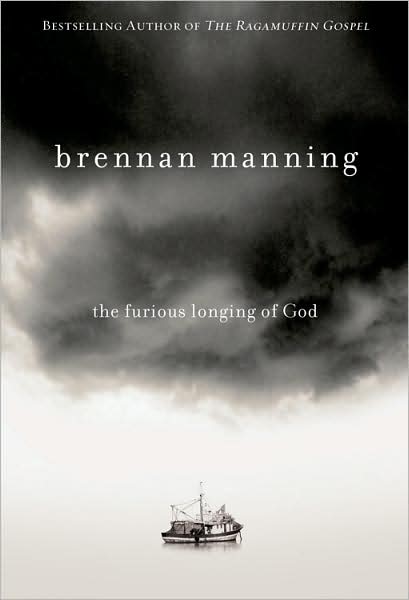
TheFuriousLongingOfGod

Not everyone is a fan of Brennan Manning’s theology but I found this book to be very refreshing.  I think his presentation of God may be a little simplistic but I appreciate his emphasis on God as a father who desperately loves and pursues His children.  That’s a message I need to hear over and over again.


9780698154100_p0_v2_s260x420

Most people have heard of Blackwater.  The organization has a terrible reputation.  This is the story of Blackwater’s history from the perspective of its  former CEO, Erik Prince.  I really enjoyed this book.  I tend to be skeptical of mainstream media so I wanted to hear this story from a different angle.  Unfortunately, I think it is impossible to know what really happened in a lot of the situations described in this book because both the government and Erik Prince are fighting to protect their reputations.  Also, much of Blackwater’s relationship with the State Department and the CIA is still classified.  My opinion is that Blackwater isn’t nearly as bad as the media made it out to be and the government was far more involved in the use of contracted security than it wants to admit.

The Power to Speak Future

I’m getting older.  I’ll just come out and say it.  I turn 35 in a couple days.  That’s halfway to 70.  I’m practically dead.

The thing about getting older is that my childhood is slipping from focus.  The details are becoming blurry.  The photos don’t help either, mostly because time has faded them to weird orange/red color.  It’s not just an Instagram filter people.  This is my life.


MEMORIES

The memories that come to me are odd.  I remember my grandmothers.  I remember the smell of one–an overpowering fusion of cigarette smoke and cheap perfume.  I also remember “wooba wooba.”  That was the word I used for my other grandmother’s ginormous flabby upper arms.  I was convinced that she could fly like Dumbo with her wooba wooba if she wanted.

Mostly I remember words, not mundane conversation but the powerful words.  I remember words shouted and whispered–phrases laced with emotion.  I remember a babysitter calling me a “little s***” because I peed the bed.  I remember an elementary school teacher announcing to my class that my life’s destiny was to be a “Lazy-Boy sofa tester.”  Apparently she wasn’t terribly impressed with my work ethic.  I remember a strange new sensation that flooded me the first time a girl told me I was cute.  I remember being called a “horse’s a**” for not doing something properly and I remember when my dad told me he was proud of me.  I remember the words.  I bet you do too.  The scenes are blurry.  The names escape me but the words and the faces that spoke them are as clear as yesterday.


WORDS

There is a spiritual power in words.  According to the Genesis narrative God spoke the world into being.  With words he created a future.

If it is true that we are created in God’s image then it makes sense that our words are powerful as well.  With our words we can create a future.

Whether you realize it or not, words have shaped your future.  When you were young, the people around you molded you with their words.  You learned to trust or to fear through words.  Words told you whether you are beautiful or ugly.  You learned that you are talented or worthless.  You learned that you can or cannot.  Words created your future.

“The tongue has the power of life and death” (Proverbs 18:21)

In fact, for years words have been breathing life into you.  Or, they’ve been killing you.  Words make you alive to who you truly are, to your talents, passions and dreams.  Words give you the sustenance to push on.  They create security, love and peace.  Or, words sabotage your identity, talents, passions and dreams.  Words crush your spirit and steal your will.  They create fear, mistrust and chaos.

Do you see how powerful words are?  There is a reason why we remember words.  It’s because they shaped and continue to shape us.  Words create future.


SPEAK

Each of us has been gifted with a tremendous power.  Words.  Regardless of what has been spoken to you, you have a choice in how you will speak.  The words you speak have the power to shape your child’s self-concept.  Your words will impact your friend’s future.  Your words will affect the culture of your marriage 5 years from now.  You have been gifted with the power to create future.  How will you speak?


How I Know I’m a Horrible Person

I don’t know about you but I felt great when I woke up this morning.  I felt amazing.  I just felt so comfortable in my own skin–just being me.  I was on top of the world, singing loudly in the shower like I didn’t have a care in the world.

And then I got in my car to drive to work.  I pulled up to a red light and looked to my left.  There, purring like a kitten tiger was a beautiful and expensive sports car.  It was gorgeous–so sleek and shiny.  I gazed longingly at all the fancy tech gadgets and luxury through the tinted windows.  Then the light turned green and that car flashed away like an angry rocket–screaming along with an intoxicatingly powerful roar.

That’s when I noticed the vastly different sound spilling feebly from my own car.  It was more like a death rattle than anything. And then I remembered how my car is about a hundred years old and how one entire panel is rusted, how my window and air conditioning are broken and how I have a tape deck.  A tape deck.  That’s technology from the 80s.  They don’t even make tapes anymore!

And suddenly, I’m not feeling so great about myself.  I’m not so comfortable in my own skin.  I’m not on top of the world in fact I’m feeling rather under it.  I start to feel sort of worthless and disgruntled.  I pound on my decrepit steering wheel.  Why can’t I have a car like that?  Why do I always have to drive around in a piece of junk car?  My life sucks.

It’s then that I pull up to the next stop light.  I look to my left and I see this car–an absolute disaster of an automobile.  A condescending chuckle erupts out of me.  Oh my!  What a piece of junk.  WOW do I feel bad for the person who drives that car.  I would hate myself.  There is no way I would drive that car.  How embarrassing.  I wouldn’t be caught dead in that thing.

And suddenly, I feel pretty good about myself.  I’m feeling pretty comfortable in my own skin.   I’m glad I ‘m not that guy.  His life must suck.

Sound familiar?  Maybe it isn’t cars but I bet you’ve done the same thing about clothes, your house or grades.  I might not be rich but at least I don’t live there!


AM I OK?

What are we doing in these moments of comparison?  Why do we do this?  I think it’s because lodged deep within each of us is a voice telling us that we aren’t OK.  There is a voice, sometimes quiet and sometimes screaming that tells us that we aren’t valuable.  And so, we look around at the people around us and ask, “Am I OK?”  When I look at his car I feel terrible.  When I look at her jeans I feel great!  And why, when something bad happens to him do I secretly celebrate?  This is when I know there is something horribly wrong with me.  There is a part of me deep inside that is broken.

This voice reflects the brokenness inside of us and I believe it reflects a broken relationship between us and our creator.  A toxicity pervades our minds and relationships.

This might sound strange but I find this brokenness in all of us to be one of the most compelling arguments for Christianity.  I don’t believe that any other worldview explains as clearly why we envy, compare ourselves to other people and why we constantly battle a little voice in our heads that tells us we are terrible people.  We’re broken people in need of repair.  There’s no self-help or enlightened path that can fix this.


image credited to Dan Iggers via Flickr

Why Small Groups Aren’t Enough

I recently realized that small groups in our student ministry aren’t working.  I found this insight surprising because I’m a huge fan of small groups.  In fact, I spent the last 5 years as the small groups pastor of our high school ministry.  I’m still a huge proponent of small groups but I’ve realized that they aren’t enough.  Unless these groups lead to something deeper we aren’t giving our student what they truly need.

What I’ve learned over the last decade of ministry is that in a culture that is largely void of adult support and care what our students need more than anything is mentors.  Our students need caring adults to show them how to live and follow Jesus.  They need a constant force of love, support and coaching.  That is what a mentor does.   I still believe that small groups are important but only if they lead to mentoring.

Perhaps the most important benefit of a mentor is that the mentoring relationship continues after students graduate out of our ministries.  I am convinced that long-term mentoring relationships are the most important thing we can offer a student.  So how do we facilitate mentoring?  The good news is that if your student ministry is based on small groups you already possess the framework for mentoring relationships.  Here are some thoughts on transforming your small group ministry into a mentoring ministry.


GET OUTSIDE

If a small group only exists within the walls of the church building or the home in which they meet then I would argue that it’s not mentoring.  Mentoring takes place within the normal contexts of life. Mentoring happens when a caring adult invites a student into his or her life.  Mentoring happens when adults invade the turf of students.  So, if we want to see mentoring in our student ministries then we must literally get into the lives and students and invite them into ours.  And, we must equip and train our volunteers to do the same.


RECRUIT DIFFERENTLY

A mentoring based student ministry requires that we make a shift in volunteer recruiting.  For the first half of my career I concentrated on recruiting the coolest, youngest, most relevant volunteers I could find.  My thinking was that I needed volunteers who would attract students and relate well to them.  While I still think that relevance is important and cool is extraordinarily helpful, there is only so much mentoring a young, hip college student can offer a high school student.  Mentoring requires experience.  I now believe we ought to recruit volunteers who have life experience because they possess more of the tools required of a mentor.  I want a volunteer who has the wisdom and life experience necessary to address some of the heavier issues facing teens.

Mentoring, at it’s most basic level is this: “Watch what I do and do it.”  Because of this we also need volunteers whose lives that are worth copying.  We need people of character and strong faith.  Character and life experience trump age and coolness.


RESTRUCTURE

A volunteer only has so much time in a week.  If you’re already asking your volunteers for two events a week (youth group night and small groups night) you may need to restructure your ministry.  I believe that the best strategy is to attach small groups to your large group programming and cut the extra night of programming.  This way all of your students get plugged into small groups and secondly, it frees your volunteers up for mentoring outside of the ministry structure.  I truly believe that outside mentoring is more valuable than another night of programming.  Feel free to disagree.


CHANGE YOUR FOCUS

How many students can one person mentor?  Truthfully, it’s probably around 3 or 4.  This means that we need more volunteers!  It also means that youth pastors needs to change their focus.  Mentoring is simple and yet terribly draining.  Mentors are constantly pouring themselves out so they need someone to pour into them.  I would argue that the role of a youth pastor needs to shift toward caring for and mentoring mentors.  If the best thing our student ministries can offer a student is a long-term mentor then the primary role of the youth pastor may need to shift toward recruiting, training and encouraging godly mentors.


It’s my belief that small groups aren’t working anymore because students desperately need adult mentors.  I’d love to hear your thoughts on this especially if you’ve found success in promoting mentoring relationships in your student ministry.


image credited to Matt Peoples via Flickr

Why I Lie

I know a family who recently adopted a little girl from an impoverished nation in Africa.  The girl has been living with her adopted family for several years and has been functioning quite well except for one area.  You see, this little girl barely survived her first few years in Africa.  She was alone living on the streets–starving.  She would wait in line for days to be served a meager ration.  Food was the one thing that was constantly on her mind.  She barely survived and was always hungry–ravenously hungry.

Thankfully she was adopted by an American family who has provided her with love and plenty of food ever since.  But, she can’t seem to shake her old habits concerning food.  Her parents have found that she eats everything.  She will take seconds and thirds and eat until she nearly bursts.  At school, she will ask to visit the restroom and instead she will slip into the communal cubby area where all the kids keep their backpacks, coats and boots.  There she systematically opens each backpack and rifles through each lunch box eating everything she can until she is caught.  Although most of her other social behaviors would go by unnoticed she will eat, steal and hoard food at every opportunity.  Why?  She is fighting to survive.  Her little mind convinces her that she must eat.  She needs to eat.  Her very life depends on it.

Her body is with a loving family who has plenty here in America but in her mind she is still a starving child living on the streets in Africa.  Her mind hasn’t caught up with her present reality.  She isn’t alone anymore.  She is deeply loved and cared for.  This is her new reality.  Her mind just hasn’t embraced it yet.


CATCHING UP WITH REALITY

I do this same exact thing and my suspicion is that you do too.  So much of what I do is designed to win your approval–to convince you that I am valuable. The jokes I make, the stories I tell and the clothes I wear are chosen to impress because I have a fierce need to be accepted and valued…and so do you.

My problem is that I haven’t embraced my present reality.  Like the hungry little girl, I was an orphan and so were you..  Not in an physical sense but spiritually.  You see, we are designed to find our belonging and value in a close relationship with our Creator and Father.  When this relationship is estranged it is impossible for us to function as whole people.  The brokenness within us will drive us to behaviors that don’t make sense–like eating everything in sight or in my case being funny, buying a pair of jeans I can’t afford or stretching the truth in a story to make myself look a little more impressive to you.  I do this because I don’t feel like I belong.  I don’t feel like I am loved.

ADOPTED

I love that the Apostle Paul described our new relationship with God through Jesus as adoption.

But when the right time came, God sent his Son, born of a woman, subject to the law.  God sent him to buy freedom for us who were slaves to the law, so that he could adopt us as his very own children.  And because we are his children, God has sent the Spirit of his Son into our hearts, prompting us to call out, “Abba, Father.”  Now you are no longer a slave but God’s own child.  And since you are his child, God has made you his heir. (Galatians 4:4-6)

I can’t help but think that God looks at our behavior the same way that we look at the starving little girl–with pity and sadness.  Don’t you realize that you don’t have to act that way anymore?  You don’t have to lie.  You don’t have to sleep with him.  You don’t have to run to that addiction.  Don’t you know that you are loved?  Don’t you know that you are mine?  Who cares what everyone else thinks?  I love you.

I have a new reality.  I am accepted and loved.  I’ve been granted the privilege to call the Creator God, “Dad.”  No offense but I’m going to stop caring about what you think of me.  I don’t need to be funny, stretch the truth or dress a certain way to gain your approval because I don’t need it.  I have the approval of my Father.  I choose to believe my present reality and I invite you to do the same.


image credited to Even Earwicker via http://www.sxc.hu/

Parenting Through The Porn Minefield

I believe that pornography is  the greatest challenge facing parents in our culture.  Boys and girls of younger and younger ages are developing dangerous addictions to pornography.  I ran across an article recently that describes specific situations of tween age porn addictions.  It’s hard to read but if you are a parent you really should.  Porn addictions are far more prevalent than we want to admit.

Jamie is 13 and hasn’t even kissed a girl.  But he’s now on the Sex Offender Register…

Now that you are sufficiently terrified, here are three strategies to help win this battle in the hearts of your children.


1.  Keep Screen Public

I think this is one of the greatest mistakes parents make.  Do not allow your kids to keep devices that can access the Internet in their bedrooms.  And yes, I’m even talking about cell phones and iPads.  Porn addiction is a massive problem for an adult but especially devastating for a kid.  In the words of John Woods, “For many young boys, this [porn] means their first sexual experience is not a nervously negotiated request for a dance from a girl at the end of the school disco. It is watching  grotesquely degrading images of women, all too often mixed in with violent abuse.”

This reality is tragic because it is often avoidable.  Keep screens in a public place in your home.  The Internet is dangerous and kids are curious.  As parents we need to protect them.

2.  Get in the First Word

People often ask when we they should talk to their kids about sex and porn.  My answer is that you want to get in the first word.  You want to be the one who starts the conversation–not a friend from school, a health class teacher or far worse, a website.  Sure it’s going to be awkward but it will be awkward in a safe way.  We need to embrace awkward!

I would recommend talking to your kid about the dangers of the Internet in early elementary school and then gradually talking about more and more as your child progresses through elementary school.  Middle school is too late.  By that point you have lost the advantage of the first word.

You don’t need to be overly graphic with little kids.  I tell my 2nd grader that the Internet isn’t safe.  There are pictures and videos on there that can hurt your mind.  I also tell him that if he ever sees an image that makes him feel dirty or something he knows he shouldn’t have seen, that I want him to tell me and that he won’t be in trouble.  A key strategy is to pave the way for honesty by removing the need for shame.


3.  Get in More Words

I also strongly believe that “the sex talk” is the wrong approach.  Instead of one conversation, I would argue for 1,000 conversations.  Someday I’m going to write a really weird book that doesn’t sell called “1,000 Sex Conversations.”  Actually, no.

The sex talk approach is like dumping a semi-truck size load of intense grossness on a terrified kid.  There’s too much information all at once.  If you’re like me you just remember being completely grossed out and overwhelmed.  There’s so much information that you don’t even know what questions to ask. All you know is that you’re never, ever going to do that!  Or, if you wait too long for the sex talk, which I would argue happens most of the time, your kid will just be bored and think you’re out of touch.

i’m not saying to skip the sex talk because it’s absolutely necessary.  Just don’t have it come out of nowhere.  A better approach is 1,000 conversations about sex with one of them being the talk on the mechanics of sex.  Gradually reveal what sex is to your children and then don’t stop talking about it.  As tweens and teenagers your students will be bombarded with information on sex.  Most of it will be misunderstandings and lies.  Culture is teaching us.  Media moguls have an agenda.  Our society is incredibly open about sexuality and so we have no choice but to do the same.

We as parents need to realize that we are competing for the hearts and minds of our children.  We need to constantly talk about sexuality and it shouldn’t be all “no, no, no!”  We need to recapture the beauty of sex.  I often tell our students, “Look, this was God’s idea.  He invented sex.  It’s amazing and awesome.  It’s not dirty.  It’s beautiful.”

And then, we need to constantly reinforce the boundaries God has established.  And, if we can’t sufficiently explain the “why” of the boundaries, we shouldn’t expect our kids to buy what we’re selling.  It’s the same as the “because I said so” argument that didn’t work when they were 5.


So, get that screen out of his room, get in the first word and many more after that.  And if you think you’re too late, you’re not!  Just dive in and be awkward now.  If you have any other genius ideas, I’d love to hear them.


image credited to H Berend via http://www.sxc.hu/