Free Teaching Series

Who doesn’t love free stuff?  Especially when that free stuff involves doing less work?

We recently did a teaching series called Gravity that I loved.  It’s a series about boundaries.  In the series we taught on boundaries with sexuality, media, friends and time.  In my opinion, the series was awesome enough that you should use it in your student ministry.

Here’s the title package…


While we’re at it, here are all the teaching scripts…

The Law of Magnets

The Law of Screens

The Law of Glue

The Law of Robots


And here’s a link to title slides, blank slides, and the title package.


Feel free to borrow/steal this material and let me know if you found it helpful.


The Law of Magnets

Have you ever found yourself in a crazy situation and wondered, “How in the world did I end up here?”  When I was in middle school, I hung out with some crazy guys who had a fondness for destruction.  We TPed the same girl’s house every weekend for six months.  We forked yards, egged cars and carried out other adventures of moderate destruction.

One night I found myself miles away from home, lying prone in a farmer’s field in the dead of winter as a spotlight scanned the field a few inches over my head.  Why was I there do you ask?  Well, my friends thought it would be a good idea to light a roll of 500 fire crackers and toss it into some guy’s satellite dish.  Afterward we ran like cheetahs until the aforementioned spotlight forced us to the frozen earth.

It was in that moment that I asked myself, “Self…How in the world did you end up here?”  Then, lying there, teeth chattering, I clicked my heels together and repeated, “There’s no place like home.  There’s no place like home.”  Turns out that doesn’t work.

But for real, how did I get there?  I was following the crowd.  I was doing what everyone else was doing.    I didn’t know it then but it was the Law of Magnets.


PILATE AND THE MOB

Throughout the Jesus story there are crowds.  Jesus was extremely popular and crowds followed him everywhere.  They were usually for Him.  But in one crucial moment, they were violently opposed to him.

Near the end of his life, Jesus was betrayed by one of his own disciples and handed over to the religious leaders—guys who hated him and wanted him dead.  Not having the power to execute Jesus themselves, they took him to Pilate who was the Roman governor of the region.  They accused him of leading an insurrection.  Pilate investigated the accusations and found that Jesus had done nothing wrong.  But then things got ugly.

“You brought this man to me, accusing him of leading a revolt. I have examined him thoroughly on this point in your presence and find him innocent… I will release him.”

Pilate isn’t a bad guy.  He’s a government official trying to do the right thing but then the Law of Magnets got him.

Then a mighty roar rose from the crowd, and with one voice they shouted, “Kill him, and release Barabbas to us!”  (Barabbas was in prison for taking part in an insurrection in Jerusalem against the government, and for murder.)  Pilate argued with them, because he wanted to release Jesus.  But they kept shouting, “Crucify him! Crucify him!”

For the third time he demanded, “Why? What crime has he committed? I have found no reason to sentence him to death. So I will have him flogged, and then I will release him.”

But the mob shouted louder and louder, demanding that Jesus be crucified, and their voices prevailed.  So Pilate sentenced Jesus to die as they demanded.  As they had requested, he released Barabbas, the man in prison for insurrection and murder. But he turned Jesus over to them to do as they wished.

THE LAW OF MAGNETS

This story blows my mind because Pilate wasn’t a bad guy.  Jesus was 100% innocent and yet a crowd, influenced by the religious leaders convinced Pilate to release a known murderer and execute an innocent man.  It just doesn’t make any sense.  It doesn’t make any sense, that is, unless, you understand the Law of Magnets.

The Law of Magnets has everything to do with crowds because crowds are powerfully magnetic.  They have a way of influencing people–magnetically pulling them toward the will of the crowd.   Maybe it’s because we are afraid of what they think or that we want to fit in.  Whatever the reason, crowds powerfully influence the way we think and act.

This is what happened to me with the firecrackers and the satellite dish and this is what happened to Pilate in Jerusalem.  This happens to you too.  I’m sure you can think of times in which a crowd magnetically pulled you into its orbit and you joined in with whatever it was doing.

Maybe it was with words.  It was degrading but everyone was doing it and suddenly you threw in an ugly but hilarious one-liner and everyone was doubling over with laughter.  Afterward you thought to yourself, “Why in the world did I say that?”  It was the Law of Magnets.

Maybe you were at a friend’s house and one minute it was video games and the next it was, “Hey let’s watch this, or smoke this, or drink this and you were like shocked but the crowd was doing it so you joined in.  It’s the Law of Magnets.


HOW’S YOUR CROWD?

I have a question for you:  Who is your crowd?  Who is the group that influences you?  Maybe it’s your circle of “besties,” your team, or the cast from the musical.  Who is your crowd?

Here’s an even better question:  How is your crowd?  Where does your crowd pull you?  Does it pull you to a healthier place or does it pull you in a darker place?  Is your crowd leading you closer to Jesus or further away?  After spending time with your crowd do you find yourself regularly asking, “How in the world did I end up here?”

Take a good look at your crowd.  Is this the direction you want to be pulled?  The Law of Magnets says that the more time you spend with them the more you’ll become like them.  That’s just how life works.  Maybe it’s time to evaluate who is influencing you.  Maybe it’s time to pay attention to the Law of Magnets.


January Book Reviews

The first month of 2014 is already over and here in Michigan it’s been the snowpocalypse.  Maybe that’s why I’ve been reading so much.  Here’s what I polished off this month…

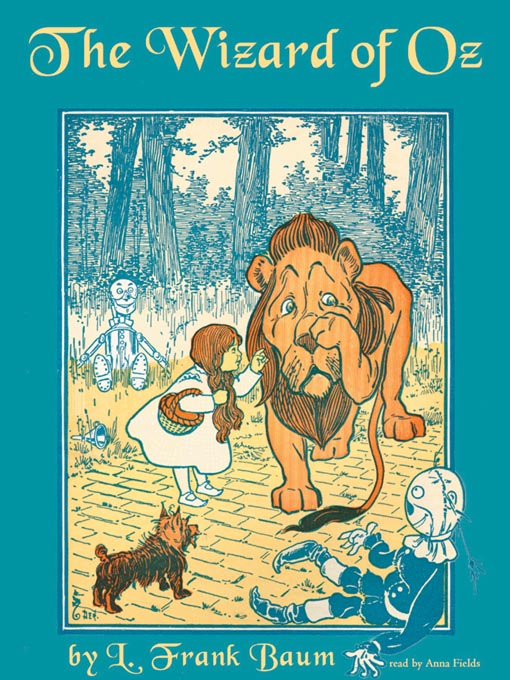
wizard-of-ozI read to my kids nearly every night because I want them to love books and because I believe that reading to them will build a sense of adventure and a thirst for knowledge.  It took us a long time to work through this classic but they loved it.

north-or-be-eaten-250

I started this series because I was considering reading it to my kids.  I think it’s a little too scary for my younger kids but as it turns out I love the series!  Maybe it says something about my maturity level…or maybe that the books are great!  I’m looking forward to continuing the series.

made in america

I’ve written before about my love of Bill Bryson.  I don’t always agree with his viewpoints but his writing style and humor are fantastic.  I enjoyed this book in particular because it’s about the history of the English language in the United States.  The book is full of little stories explaining the odd phrases that we use without knowing where we got them.

I’m obsessed with history and I love literature and writing so Made in America was a perfect fit.  I know, I know, the topic probably sounds boring but I was constantly laughing.  It’s was highly entertaining.

mourik-web1


I just finished this book and I’m still processing it.  This was a much heavier read than the other books I read this month–in a lot of ways.  I picked it up because I love the outdoors and also a gritty story of struggle.  The book definitely delivered in both categories.  I couldn’t put it down.

What I didn’t love was the crassness.  It was dirty to the degree that I can’t really recommend it which is disappointing because Cheryl Strayed is a incredibly expressive writer.  She conveys emotion and pain wonderfully.

So, what are you reading?  I’d love to hear of any reading recommendations you have.

Salsa Dancing and Pain

In my early 20s I was under the illusion that parenting would be easy.  You feed them, change them and put them to bed.  Game over.  I was ready to start a family about 6 weeks after my wedding.  Thankfully my wife being far more sensible, convinced me to wait for a few years.  Parenting, as it turns out has been astronomically difficult.  No other role in my life has so dramatically attacked my inherent selfishness.  I learn new things about myself and what it means to be human nearly every day.  For example, I recently learned that my kids are vastly different from each other.  I was sort of under the impression that parenting one kid would be remarkably like parenting another.  How wrong I was.  For the sake of illustration, let’s talk about how each of my kids handles pain.

My oldest son is easiest for me to understand because he’s like me.  He cares immensely about what people think of him.  When he gets hurt he’s going to play tough because he’s concerned about your impression of his ability to handle pain.  Just the other day he was doing an impersonation of El Macho’s salsa dancing from Despicable Me 2 (a scene worthy of another blog post) when he bashed his shoulder into the kitchen counter.  He hesitated but carried out his salsa maneuvers like a champ.  When it comes to pain, my oldest is going to play tough.  In responding to his pain it’s best to tell him how tough he is and sort of move on.

My oldest daughter could not be more opposite.  For her, there is no way to tell the difference between a stubbed toe and a severed leg.  The screaming will be the same in each situation.  She is dramatic and emotional to degrees I’ve never ever heard of.  The best way I’ve found to respond to her is to simply hold her for a very long time and then we’ll still probably have to talk about what happened for hours…girls.

My youngest son is very peculiar in his approach to pain.  The kids and I will be wrestling in the living room and I’ll look around for him and he’ll be gone.  Somehow, in the midst of pillow projectiles and children being catapulted onto various couches, Jack got “bonked” on the head and disappeared behind the couch.  Though he’s hiding, he isn’t crying and if you try to pick him up for a hug him he will yell and squirm.  When hurt he doesn’t want to be noticed or coddled.  He wants space.  He’s rather like me at my birthday dinner.  If a waitress so much as sings a note of “Happy Birthday” she will get a french fry to the eye.

My youngest daughter is a fireball.  Although only 1 she has her own way of handling pain.  Just yesterday she tried to kiss her baby doll and the plastic face was a little too hard on the lips so she screamed and launched the baby across the room.  When hurt, my daughter is likely to punch you, bite you or throw something at you.  It doesn’t matter if it was your fault or not.  She’s like a hornet’s nest.  The closest person is gonna get it!

So there you have it.  4 kids with 4 entirely different approaches to handling pain.  And this is just one issue.  As it turns out parenting one kid is rather unlike parenting another.  It’s not easy and it takes far more strategy than I originally supposed.  I’m learning that I must customize my approach to each of my kids.  And yet, I love it.  Each one of them is a unique mystery full of possibility, challenge and promise.  I can’t wait to see how each of their individualism emerges to tackle the world.


image credited to whatumean

Virtual Tour of Ukraine Protests

Over the last few years the people of Ukraine have stolen my heart.  The protests in Kiev and now other cities have been on my mind since they first began.  One of the first things I do every morning is check the news and updates from friends in Kiev to see what transpired while I was sleeping.

I want to share this article with you because it provides the best visual descriptions of the protests that I’ve seen.  It’s a virtual tour of the protest grounds provided by the protestors themselves.  There is no media bias here.

Please understand that these protests aren’t a disorganized hodgepodge of fiery radicals.  This isn’t about hate or revenge.  This isn’t a grab for power.  This is about democracy and throwing off tyranny, corruption and oppression. The people of Ukraine have suffered enough subjection.  It’s time for them to be free.

For the most part, the protests are incredibly organized, intelligent, and humane.  Check it out for yourself and pass it on.

The Anatomy of Maidan


Practices that Promote Lifelong Faith

Recently I was asked to describe our student ministry’s strategy for helping students develop faith beyond high school.  This is one of my life’s passions so I’m glad to share.  Yesterday I blogged about what I believe is the culture necessary for promoting faith beyond high school.  You can read the post here.

Today I’m writing about the specific practices we employ to help our students’ faith stand in life beyond our student ministry.  Here they are:


Preparation

Students are often ambushed by the complexity of life after high school.  One of the best ways we can help our students is through education and conversation.  We created a supplemental curriculum for our seniors that covers topics like these:

  • Calling
  • Money and Debt
  • God’s Will
  • How to pick the right college and major
  • How to be awesome at being married

We use two books as well.  I developed a few teachings from Andy Stanley’s The Principle of the Path and we build the entire first semester around Donald Miller’s Storyline.  I find the concepts in these books to be extremely helpful for seniors.  The main point is that we gather ours seniors regularly and talk specifically about the transition they are entering.  By doing this we also retain our seniors very well because, well…they don’t have to hang out with freshmen.  And, the topics are relevant to where they are at.

Capstone

Every year we invite our seniors on a retreat we call senior sneak.  This event is designed to challenge and equip our students to continue pursuing Jesus in life after high school.  It’s also an incredible bonding experience for our students and their mentors.  Our goal is to cement these relationship because the students will need their mentors in the year to come.

This event is also our most extravagant event.  We spend a little extra money to provide our students with a special experiences.  It’s another way for us to retain our upperclassmen.  We’ve built enough buzz over this event through the years that most of our students really look forward to the experience.

Hand Off

We have sworn off the graduation cliff.  A handshake and a graduation book isn’t good enough.  We believe that it’s our responsibility to connect our students with a new ministry or church and to check in on them.  We also vision and train our volunteer mentors to maintain relationships with their students for at least the first year of college.  Often, these relationship become lifelong friendships.

Support

One of the simplest and most effective things we do is send a care package to our graduates during their first month of college.  The first semester of college is incredibly disorienting.  Our goal is to remind our graduates that we still care about them and that they still belong.  We send them food, LifeLine gear, a Starbucks card, digital bible studies and letters from volunteers and staff.  The feedback we get from these packages is incredible.

In addition to the care packages, we assign one of our staff members to support our graduates throughout the year with regular text messages, and social media check ins.  It’s a small time commitment that pays incredible dividends in encouragement.

Reconnect

The last thing we do is invite our graduates to two different events during their first year of college.  The first is a reunion event for all graduates and their small group leaders.  The goal of this event is to first remind our graduates that we still care about them and their faith development and second to reconnect graduates with their mentors.  This relationship is the most important thing we can offer them.

The other event is a special night at our senior gathering where graduates come and share about what they’ve learned in life beyond high school.  They offer advice to our current seniors and answer questions about what college is really like.  This is a huge win for both our graduates and our current seniors.


So there are some of the practices that we employ to help promote lifelong faith in our students.  I hope you found something helpful.  I’d love to hear some of your genius ideas as well.


image credited to Xiaobo Song

A Culture of Transition

Recently I was asked to describe our high school to college transition strategy and practices. Since this is one of my life’s passions I thought I’d give it a shot.  I hope you find it helpful and I’d love to hear your ideas and strategies.

Culture

What keeps me awake at night is the thought of our students walking away from Jesus and the church in life beyond our student ministry. I believe that our ministry has not been successful unless our students are continuing to pursue Jesus in college and beyond.

I think the mistake many youth workers make is jumping to practices that help students transition before stopping to consider the influence of church and student ministry cultures.  What students feel and experience is more powerful than what we say from the stage, especially for those who are involved in our churches from a young age.  Here are the culture pieces that I believe are crucial to healthy transition.

1.  A Culture of Community

I tend to believe that students walk away from churches where they never actually belonged.  Belonging is something that is felt and experienced not taught or preached.  We begin placing kids in small groups as soon as they can walk around.  We fight for a culture of community from the earliest days of involvement in our children’s ministry.  This is crucially important because kids learn:

  • Adults in my church care about me and my faith development
  • My story is important and valuable.
  • Faith is meant to be lived out in relationships.

Everything else that we do in our transition ministry is built around these values.

2.  A Culture of Mentoring

For years in student ministry we’ve talked about the importance of small groups in student ministry.  I believe that small groups are crucial but only when they are the right kind of small groups.  You see, more than anything the students of this generation need mentors.  On the whole, our culture no longer invests in the next generation.  It exploits them.

We must become ministries and churches that pour into students.  We must walk alongside them and demonstrate the way of Jesus.  In our ministry, we pair a mentor with 5 or 6 students for 4 years.  We use the model of small groups to achieve this.  However, we are clear that the “win” is not small group discussions.  The “win” is mentoring.  Small groups are the spring board into a mentoring relationship.  This long term mentoring relationship is key to our transition strategy.

3.  A Culture of Honesty

Many students who walk away from faith in college were silently drifting long before they formally walked away.  These students never spoke their doubts because they weren’t welcome to do so.  Left in the dark these doubts became stronger and eventually overpowered their faith.

Our student ministries must become places where doubts are acknowledged, appreciated and talked about openly.  Our student ministry cultures must communicate that doubts are normal.  We need to stop providing quick and flimsy answers to deeply disorienting questions.  Faith isn’t the absence of doubt.  Rather, it is faith in the midst of doubt.  Doubts pulled out into the light of community lose their power over us.

4.  A Culture of Integration

Some youth workers may disagree with me but I believe that one of the biggest obstacles to students transitioning well is student leadership or ministry teams.  Hold on.  Let me explain.

Many students walk away from church as emerging adults because they never felt like they belonged to their church in the first place.  They felt a fierce belonging to their youth group but after graduating high school they never connected with the larger church body.  Leadership and ministry teams are often counterproductive because they foster intense attachment to the student ministry and not the church as a whole.

Our strategy is to encourage our students to serve within the larger church body rather than within our student ministry.  We want them to become attached to Ada Bible Church, not LifeLine.  We believe that the best place for a student to serve is in our children’s ministry.  There they can use their talents to serve kids and perhaps more importantly, they serve alongside and develop stronger relationships with more adults from the church community.  This way they can also continue to serve after graduating high school.  Integration is the friend of transition.


Helping students pursue Jesus after leaving our student ministries begins with culture.  It requires a culture of community, mentoring, honesty and integration.  Tomorrow I’ll outline the specific strategies we employ to promote long-term faith development.


What Your Kid Needs From You in College

So how do you parent a college student?  While every child is wired differently I’d love to share a little about my college transition experience, and share some advice on what worked for me and others around me.


 LET THEM BE

With the freshman year transition, immediate physical separation from my parents did a lot of good. As counter intuitive as it may sound, I noticed that the less my parents were physically present, the more I grew into my own skin.

In high school, your parents are kind of “always there”, and therefore a link to the life you need to transition away from. In my belief, it was good for me to cut myself off from my home; it also forced me to rely on The Lord and His strength, and not my own. My relationship with Him grew so much more when I only had His presence and promises to lean on.

Now, I’m not saying “PARENTS DON’T TALK OR BE WITH YOUR KIDS EVER, YOU’RE STUNTING THEIR GROWTH!”  Believe me, your kids will need to talk. A lot. I couldn’t even tell you how much time I spent on the phone with my mom.  That’s definitely needed. But, it should stop at that: advice and wisdom.

Additionally, encourage them to not come home as often. Again, I don’t mean to sound harsh, but establishing a presence on their campus does WORLDS of good for them. It allows them to make their school their new home, and also allows their own individual life to be established, instead of constantly having their adolescent life being fed into their present reality. Staying at school on the weekends, although hard sometimes, allowed me to develop new relationships, get to know my surroundings better, find a new home church, and just simply establish my roots. And I’m so glad I did.


STAY THE COURSE

My first semester of college was awful. Really awful. I didn’t want to be at the school I was at, I was homesick and terrified of becoming an adult. I love my school now and it had truly become home but at the time I was really struggling. However, the best thing that my parents did during those times was to remind me of God’s faithfulness.  The Lord had provided in so many ridiculously amazing ways for us to even afford college and He would see me through.

My parents did the wise thing and redirected my focus away from my emotions and toward the logistics of how God had shown Himself real and present.  A quote that got me through a lot: “When you cannot trace God’s hand, you can trust His heart.” (Charles Spurgeon)


 THE SHIFTING OF ROLES

I found that my relationship with my parents grew tremendously when I went off to college.  Our relationship transformed from one based on authority to one based on friendship and shared experience.

And the beautiful thing is that through college, I began to see my parents as wise adults who have been in my shoes before. Yes, my parents were my age at one time and learned the same exact things I did. That mutuality is absolutely priceless. Embrace that transition. It’s beautiful.


 LISTEN

As I said earlier—college freshman need to talk things out. Talking helped ease the stress that I was feeling—and parents who were willing to listen made all the difference.  This doesn’t mean you towards “fix” the problems.  Sometimes just having somebody to talk to makes all the difference. These conversations further cultivated our relationship. Don’t shrug off the times that your child wants to talk. Those times mean the world to us.


LOVE AGGRESSIVELY

Despite what I’ve suggested about transitioning away from home, please continue to show your kids that you love them. Some of the best moments in my college career were when I had this feeling of “Man, I’m growing into my own person. I’m becoming Spencer Penfield,” and then that afternoon I received a letter from my mom just saying that she loves me. Or a random phone call from my dad asking how my day was going. That combination made me feel like I could do anything

Finding ways to show your child how much you’re rooting for them, how much you love them, and how much you think what they’re doing is great- that’s what gets us by. Being separate, but continuing to love and encourage, that’s what it feels like to grow up.

So, whatever stage of the transition process you may be in and however frustrated or great you feel, rest in this truth:  transitions are meant to bring us to a spot where we have to put everything into the Lord’s hands. It is through these times that we are given the beautiful opportunity to surrender to the One who is constantly working something in us. And that is a beautiful truth to rest in.

IMG_1964

Guest Blogger:  Spencer Penfield will be graduating with a major in Strategic Communication, and a minor in International Business from Cornerstone University this spring. There, he is the Marketing Intern where he helps manage the University’s social media. Spencer is an aspiring photographer, writer, dreamer, and storyteller. You can see his work www.facebook.com/spencerpenfieldphotography or www.spencerpenfield.com


Image Credited to Paul Stainthorp