1 Practice That Could Transform Your Student Ministry

Most of us would agree that volunteers, particularly small group leaders are absolutely crucial to a strong student ministry.  A healthy, mentoring relationship with a caring adult is the one thing we can offer a student that they can’t get anywhere else.  It’s is imperative that our small group leaders are amazing!  Why is it, then, that we often invest so little in our small group leaders?  They ought to be our number one priority.

Years ago, our student ministry team stumbled upon a practice that has transformed our student ministry.  I honestly believe that our volunteer team is stronger than any I’ve seen anywhere else and our strength is built upon one simple practice that any student ministry can implement.  It’s so simple, easy and cheap that I can’t figure out why more student ministries don’t embrace it.  What is it?  Cloning.  You take your best volunteers and you simply clone them.  It’s genius!  OK, not really.  I mean that would be cool, but that’s not what I’m talking about.  Read on.

The super secret amazing practice that we stumbled upon is an hour long, weekly leader meeting, at the beginning of our programming.  Seriously, that’s it.  Every week, whether we are at one of our church campuses or in homes, the night begins with an hour long leader meeting that includes 4 components:  food, community, instructions and training.


FOOD

3495871394_b779997772_m

Including our leader meeting, our typical night of high school programming lasts for 3 hours.  You can’t ask volunteers for 3 hours without feeding them!  Besides, food is always a great way to say thank-you and it is foundational for building community, which is what we’re all about.


COMMUNITY

WTV8V9of43c

We believe that small group leaders are at their best when they serve as a community.  Weekly leader meetings have helped us build quality community.  Here’s how it works: each volunteer is placed in a team of volunteers–usually 8-10 people.  This team always sits together at every leader meeting.  Our goal is that this team would function like a small group.  Eating a meal together every week greatly contributes to the family culture that we’re attempting to build.  We firmly believe that in order to build real community you need consistency and time.  A weekly leader meeting that includes a meal ensures that both components happen on a weekly basis..


INSTRUCTIONS
6644769605_a10d9481c3_m

In order for a great night of student ministry to happen, all the key players need to be on the same page.  The third component of our weekly leader meetings is instructions.  This part is easy and most student ministries already do this.  We usually take about 5 minutes to walk through the night and make sure everyone knows what to expect, the goals, and the roles they need to fill.  One important point is that all of our volunteers and staff already know what will happen before our leader meeting because they (hopefully!) read our leader blog.


TRAINING

406474526_c652bffa19_m

In my experience, most student ministries are somewhere between poor and terrible at training their volunteers.  It’s difficult to find time and training events are often poorly attended.  What if, instead of 2 or 3 training events throughout the year, you did 30 minutes of training every week?  If your student ministry only meets during the school year, like ours, you still get 16 hours of training (32 weeks x 30 minutes of training).  And how much do you really think volunteers retain from a 1 or 2 hour training event?  Weekly 30 minute trainings are the way to go!  We love this model.

So, what do we train them on?  All kinds of stuff!  We talk about small group leading practices, our philosophy of ministry, how to handle crisis situations, how to talk about sexuality with a students, we invite our best small group leaders to share their best practices, we talk about how to partner with parents, how to do a one-on-one meeting with out being weird…basically, we train them on everything!  We find this training time to be incredibly valuable because we know that our student ministry is only as strong as our volunteers.  Let’s put it this way:  discipleship in your student ministry will only be as effective as your disciplers.


So there you have it–one practice that could transform your student ministry.  It’s all about elevating your volunteers through an intentional weekly volunteer meeting.  What do you think?


pizza image credited to rdpeyton via Flickr

Lego image credited to Nick Royer via Flickr

Chalkboard image credited to Jeff Warren via Flickr

Planting Dormant Seeds

I recently met up with a friend from high school.  This was a guy I shared Jesus with 18 years ago.  We were juniors in high school (yes, I’m that old).  At the time, he was receptive to the Gospel and I did my best to disciple him.  He joined my church’s youth group and we even formed a little rogue small group on the side.  He was full of passion and questions.  As often happens to high school friends, we grew apart when we moved away to college.  At first we talked periodically and then lost touch for many years.

Fast forward the tape 17 years, and I found myself sitting across from this old friend at Starbucks, listening to him narrate the tale of his life.  It hasn’t been a smooth journey.  He made a mess of things–very nearly destroying his family and himself.  And yet, in the midst of his destructive behavior, he couldn’t get away from Jesus.  He couldn’t get away from the conversations we had in high school, 17 years ago.  The seeds that were planted simply wouldn’t die.

To use his own words, he wasted many years of his life running from God and living for himself, but in the end, when his eyes were finally opened to the train-wreck he was headed for, he returned to Jesus.  He confessed his betrayals and sins to his wife and friends and by grace they responded with forgiveness and accountability.  Now, a few years beyond this breaking point in his life, he is thriving in his faith.  He’s engaged with a good church and he and his wife are working through marriage counseling.  He told me that finally, after two years,  they’ve graduated to monthly sessions.

What amazed me about this story was the time it took for this prodigal to come home.  It took years for the dormant seeds that were planted to grow.  There’s a lot of life that happens over 17 years!  How often I’ve assumed that a student is done with Jesus after only one 1 or 2 years of wandering.  How many times have I been wrong?  How many times did I give up too soon?

As a student pastor, I constantly remind myself and our volunteer small group leaders that student ministry is a long-term investment.  This conversation at Starbucks was a taste of my own medicine.  We can’t predict how the words of grace that we speak, on behalf of Jesus, will play out in the lives of those we invest in.  Mentoring a teenager in faith is incredibly powerful, but we often can’t predict how long it will take for our words to take root.  In the case of my friend, it was 17 years.

I can’t help but wonder how my friend’s journey might have been different if we had stayed connected.  How much pain could have been avoided if someone had been speaking love and truth into his life during his wandering?  We must find ways to stay connected and invested in the lives of our students in life beyond high school.

Sometimes the seeds we plant will remain dormant for years, sometimes for decades, but the planting of these seeds matters.  What we as student pastors, volunteers, small group leaders, parents, teachers and mentors say and do in the lives of students is hugely important.  Don’t give up.  Don’t quit.  Never write a student off.  We never know when seeds are lying dormant, waiting for the right conditions or stresses to spring to life.


image credited to Rex Boggs via Flickr

The 1 Thing You Have That Trumps Culture

Recently, I attended the Orange Tour at Woodside Bible Church in Troy, MI.  BTWs, if you haven’t been to the Orange Tour, it is a great one day experience.  We took our entire family ministries team and loved it!  And, Woodside Bible is a pretty cool church who I enjoy talking with because, like us, they are a large church attempting to figure out multi-sites.

Anyway, while I was at the Orange Tour, Reggie Joiner said something that has stuck with me.  When he said it, I wanted to stand up and shout, “YES!” but I didn’t because I got scared.  I didn’t come from one of those church backgrounds where people yell amen at the preacher or even clap.  We grunted or perhaps nodded.  Well, now I’m off-track.

So, let me paraphrase what Reggie said:   We, in student ministry, often get caught up in the flash and bang of programming and environment.  We focus on great videos, lighting, sound, games, and musicians.  We tend to believe that these things will attract people.

Many of us, who don’t have access to the massive budgets of mega churches, feel that we can’t compete with the larger churches.  They have their fancy youth centers, production engineers, and arena-quality auditoriums.  If the flash and bang of programming and environment is what attracts students, then smaller churches might as well close up shop, right?

But, the truth is that none of us, mega or small, can compete with what people see on TV, YouTube or the theater.  Our culture will always win in a war of technology and entertainment.  Whether you are a mega church of 20,000 or a country bumpkin church of 50, you cannot consistently beat culture in a game of who is more technologically or artistically innovative.

There is, however, one way in which culture can never beat us.  There is one thing that we provide that students cannot get anywhere else in our culture, and that is caring, spiritually mature adults who consistently love students and invest in them.  It’s all about relationships.  The vast majority of kids don’t have adults in their lives who are consistently there for them, whose motives are not exploitative in any way.  These relationships are where we can win, and this is why a small student ministry can be every bit as effective as a meg church student ministry.

Here’s how to do it:

1.  Recruit and Equip Pastors

Students have plenty of adults in their lives.  It’s not that we just need more nice adults.  What we need are pastors.  We need adults who are spiritual mature who have the capacity and desire to walk alongside students and mentor them in faith.  In our ministry, the small group leaders are the pastors.  They are the ones who shepherd the students.

To be clear, this requires and immense amount of training, community and coaching.  We imbed our small group leaders in community, train them on a bi-weekly basis and constantly meet with them for coffee along the way to encourage and guide them.  The truth is, our staff invests far more in our volunteers than our students.  This is one of the secret ingredients for growth in student ministry.

2.  Think Long-Term

The kind of shepherding relationship we’re talking about doesn’t happen overnight.  It takes years to develop.  Most students don’t have adults in their lives who are consistently there for them so it takes a long time to build trust.  We ask our middle school leaders to lead for 3 years and our high school leaders to lead for 5 (4 years in high school and 1 year beyond).  The depth of relationship we are talking about here takes a long-term investment.  You have to fight for longevity.

We’ve achieved longevity because our staff stick around forever and because we’ve created a culture in which the kind of adults who are want hate leaving.  Give your volunteers the same depth of community and shepherding that students crave.

3. Focus on the Conversation

If relationships are the one way we can beat culture every time, then our entire focus should be on the conversation.  Every event should be about groups and groups should be the focal point of all your programming.  For us, the focus isn’t worship or even the teaching.  It’s small group time.  The teaching always points to a conversation that leaders have been prepared for.  On retreats, mission trips and camps, small groups experience these things together.  It’s all about the conversation.


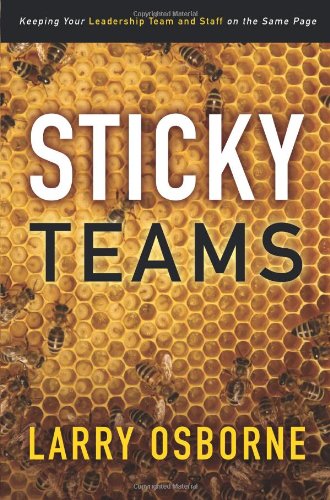
So, whether you are a student ministry of 10 or 10,000, relationships are where we can win.  We can offer students something incredible powerful and magnetic:  a relationship with a caring adult who loves them and wants to invest in their lives.  If you’d like to learn more on how to develop a student ministry like this.  This is the book for you:  Creating a Lead Small Culture.

81ZYpIYPO2L


photo credited to David Pacey via Flickr

Falling Leaves and Lots of Books

Leadership and ministry require knowledge and wisdom.  Every morning I pray for wisdom because I constantly feel inadequate to lead my amazing team.  With that said, I don’t think wisdom is a passive exchange.  I don’t believe that God honors the request for wisdom without the pursuit of wisdom.  And, that’s why I read voraciously.  Wisdom is something that is developed over years.  I think it is more like the 10,000 Hours Rule that Malcolm Gladwell made famous in his book Outliers, than it is momentary infusion of insight. So, if you are in leadership or ministry…or life, I implore you to read voraciously!  Here’s what I read in September:

519GwSuqxcLOne of the best times to read is while traveling.  I read this book while flying to and from Costa Rica on a scouting trip for a summer missions location.  Osborne has a ridiculous amount of ministry experience.  One thing I appreciate is that over the years, his church has grown from small to ginormous.  Because of this, he has a good understanding of leadership and church culture in a variety of settings.

13435889I really enjoyed this book.  I was fascinated by his research into character.  Tough’s thoughts on the importance of performance character as a predictor of success has influenced my thinking a great deal.  If you have kids, this is a great book to help you think differently about training your children for success in life.

talk-like-ted-400x400-imadte4ymfsyqpymRecently, I attended an artist conference in Nashville, called Hutchmoot.  During one of the sessions, Andrew Peterson asked the audience to share with the person next to them the last book they had read for fun.  My answer was this book.  The person next to me answered, “Isn’t that a book for work or something?”  And, I said, “Yes, but I love my job and I love speaking.”  In my head I thought, “Speaking is an art too dang it!”  But, I didn’t say that because I have a measure of social awareness.

Anyway, this is a great book for those of us who speak or teach on a regular basis–in any format.  I believe there are a million reasons to think of a student ministry teaching like a TED talk.  We have much to learn from the best communicators in the world and this book is an insider’s look into the presenting philosophy of TED speakers.  Check it out.

JunkyardPlanet_Na_Cvr1Sigh…yes, I read a book about trash.  This book was amazing!  The author grew up in the US scrap industry and then spent the better part of a decade in China exploring where American trash and scrap goes.  If you’ve ever wondered where your car goes when it dies or whether that bottle of Tide you just emptied goes to heaven, this is your book.  In my opinion, this book finds a nice balance between hardcore environmentalists and heartless big business.  The truth is often in the middle.  Idealism doesn’t often work in the real world.

As Americans who often think that separating our recyclables into the correctly colored containers is an act of heroism, we need to hear the story of how these items are actually recycled.  We need to learn about these Chinese recycling centers, places so polluted that even the Chinese government, hardly a stalwart of environmentalism, has shut them down.  We owe it to the impoverished rural Chinese who are poisoned by the thousands to transform our throw away metals, electronics and plastics into new goods that we can recycle all over again.


Why We Meet in Homes

Our student ministry meets in homes every other week.  Crazy I know.  Twice a month, we sacrifice epic large group programming and cram our students and small group leaders in regional homes.  We sacrifice the awesome band, stage lighting, world class teacher (me of course!), stage, convenience, latte maker and everything else. Why would we do such a crazy thing?  Because, the payoff is tremendous.  I’m telling you that this model is a secret weapon that the rest of the student ministry world needs to wake up to!

Here’s a video we recently made for our parents to explain why we do this crazy thing.  Check it out.

Why we do House (formerly called Cell Family) from Lifeline Student Ministries on Vimeo.


Let’s Go to Orange!

Hey Friends!

Today is the last day of the early bird rate for the Orange Conference.  I absolutely love this organization and this conference.  I’d love for you to come this year.  Here’s a recap of my experience at Orange last spring…


Last week, I traveled to Atlanta with a few members of our Family Ministries team to join 6000 others for the Orange Conference.  As a student pastor, I’ve been to a lot of student ministry and family ministry conferences.  In my opinion, this was the best.  If you serve students or children, you need to go next year.  Here’s why.

 truck1

Food Trucks

Everyone knows that the most important thing about conferences, or life for that matter is food.  Maybe I’m a little obsessed but I love great food.    Spice, flavor, combinations and ethnic touches dazzle my palate.  One of the things I love about Orange is that they bring in food trucks–seriously, one of the smartest inventions of all time.  Also, I love sitting around the table with people I care about or want to learn from, sharing a meal and talking about ministry and strategy.


Laughter

Ministry is a sloppy bucket of stress.  Particularly at this time of year, we’re all slightly to moderately frazzled.

4580190970_01be2184fc_m

“Did you just stick your finger in an electric socket or maybe hug a nuclear warhead?”

“Nope.  Just finished small group.”

“Cool.”

Orange brought an insane amount of comedy this year.  At times, I was crying because I was laughing so hard.  I woke in the morning with sore abs.  This may have more to do with sloth than comedy…Either way, thanks for the ab workout.


Value

Sadly, not every work environment or church values creativity and artistic expression.  One of the things I love about reThink and the Orange Conference is a high value on creativity and art.  They understand the work it takes to write good curriculum, produce quality videos and create engaging programs.  It’s more art than science for sure.  It’s a lovely feeling to be told over and over again that the work we do matters.  Also, I saw a bunch of ideas that I’ve already begun stealing.  Don’t tell anyone.


Collaboration

The thing I love the most about reThink is that they elevate the local church.  They are constantly looking for ways to connect people like me with other youth workers who serve in similar contexts or think about ministry in the same ways.  Through my new friend Jeremy at reThink, I met a bunch of youth workers at Orange.  I’m pumped to engage these men and women in conversation about how exactly we do this work God has called us to.  I love collaboration.


Shared Wisdom

For me, the best moment of Orange was Andy Stanley and Reggie Joiner demonstrating how to talk to middle school students about same sex attraction.  This is obviously a conversation in which many churches have dropped the ball.  The mantra I walked away with is this:  “We believe the church should be the safest place for students experiencing same sex attraction.”  I’m in for struggling toward this goal.


Strategy

I could talk strategy all night.  Specifically, I love to sit around with student ministry workers and discuss how to do what we do better.  I love to dream, evaluate, fret, deconstruct, and tinker with concepts and practices.  The Orange Conference is an excellent place to do this.


Restoration

I’ll be honest, I limped into the Orange Conference this year.  It’s been a beast of a year.  I’m in a new and challenging role, we opened high school ministry on a new campus, hired 4 new staff, battled through the worst winter in recent history (which translated into numerous cancellations and a momentum free fall).  A week ago, a ll I really wanted was June because June means the ministry regular season is over.  And yet, somehow, someway, through food trucks, laughter, imparted value, collaboration, shared wisdom, and strategery sessions, I’m back in the ring itching for a fight.  I’ve fallen back in love with my work, my team and the struggle of passing on faith to the next generation.

Here’s to you reThink for an “eptastic” week.  And for the rest of you, let’s meet up in Atlanta next April.


static hair photo credited to Jeff Latimer via Flickr

How to Fail College

I recently read a statistic that blew my mind. For most of the 20th century, the United States has led the world in college graduates. Recently, we’ve fallen out of the top ten. In fact, we now lead the world in college dropouts. If you’re curious, I read this in “How Children Succeed” by Paul Tough.

Obviously, this is a bad thing…I think. I’m curious why you think this is happening, but for now, I have a few ideas.

1. Cost

The cost of college tuition has gone up 6 fold over the last 30 years. It is true that a college degree is still valuable but tuition costs have spiraled out of control. I personally know of many students who have dropped out of college or decided against college because of the cost. In addition, the epidemic of student loan debt has dissuaded many more prospective students, or at least pushed them toward community colleges, where dropout rates are much higher (roughly 60%).

2. Hyper Focus on College Entrance

Our government and schools are incredibly focused on college acceptance. College is talked about as if it is a magic bullet to end poverty. An incredible array of government programs have been put into effect over the last 50 years to get more students into college, but to my knowledge, very few resources are devoted to getting students through college.

Let’s be real, college is terribly difficult! The academics are demanding, the challenges of transitioning into adulthood are overwhelming, and social temptations are pervasive. If we want to move out of the basement of college completion statistics, we probably need to change our resource allocation and focus.

3. Lack of Direction

Years ago, graduating seniors had far more clarity on their career and life goals than today. Now, for a variety of reasons, college age students often experience an extended adolescence. Most of the college students I know who drop out, do so because they are confused about their life direction and rather than spend thousands of dollars trying to figure themselves out, they drop out, for at least a while. It is clear to me that, whatever the causes, a lack of life direction is a major factor on why many students are dropping out of college.

4. Lack of “Performance Character”

There is tremendous pressure on the typical teenager to achieve–in academics, sports, and extracurriculars. What matters are grades, high ACT scores and awards. While these things have their place, I believe we’ve lost something that matters deeply: character.

I’m talking about character traits like self-control and grit and enable a student to delay gratification and work hard in the face of temptations and difficulty. In short, I believe we are over emphasizing our student’s résumés and under emphasizing the skills and traits that will enable them to succeed in college.

5. College Isn’t for everyone

My last point is an argument that maybe being last in college dropouts isn’t such a bad thing. I know many recent college graduates who have a great degree from a reputable school but can’t land a job in their field of study. It is the dominant story in the 20 somethings I know. In contrast, my dad’s water well drilling business is always in need of skilled laborers who possess strong character and a willingness to work hard. He pays them well too, right out of high school!

While highly educated and qualified college graduates struggle to make minimum payments on their college debt because they can’t find the jobs they were promised, there are more jobs available in the trades than employers can fill. Maybe dropping out of college isn’t such a bad idea.

I’m curious what you think about America’s awesomeness at dropping out of college. Is it good or bad? And, if it’s bad, what can we as student pastors and educators do to help our students?


image credited to Robert Hruzek via Flickr

What I Learned in Costa Rica

As I write this, I’m chilling in San Jose, Costa Rica.  I’m here hanging out with Young Life staff, learning about their ministry in Central America. I’ve only been here a few days but I’ve been blown away. I love listening to ministry leaders talk about how God is moving–listening to their strategies and war stories. Here’s what I’ve picked up from Vida Joven.

Let God Drive Your Vision

These people pray and listen with intentionality. At one point, I heard someone say, we’ve been praying about this opportunity for ten years and God is just now opening up a way. 10 years? That is persistence!

Every leader I’ve talked with naturally articulates a posture of obedient following. They believe that God has given them a vision that stretches their personal and organizational capacities. They know what they are called to do, where they are called to do it and they work tirelessly to make it happen. It’s amazing to see.

To be honest, this focus is a challenge for me. I wonder if I spend enough time praying and listening, really trying to capture where God is moving.

A Clear Mission is Fuel

Every person I talked with on the Young Life team was buzzing with the same mission: We are called to disinterested teenagers, and our volunteer leaders are the pastors of these kids. When everyone is aligned with the mission, amazing things happen. A clear mission is like fuel. It propels you forward and ignites effective ministry.


Ministry is Always About Empowering People

What I love about the Young Life method is their focus on leader development. So many of the leaders I talked with were formerly students in the Young Life program. I love the emphasis of identifying leadership potential and then pouring into those people with relational energy and discipleship. It’s almost like it’s biblical or something…


Futbal is different here.

One of the highlights of this trip so far, has been a Costa Rican Premier League soccer match. I never really played soccer, although I do enjoy FIFA 15. Anyway, the crowd was small because of rain but the rowdies were insane. Those people never stop jumping, singing and shouting. One guy in particular banged on his drum the entire match. That’s like 3 hours! The devotion and passion of those fans was fun to watch.


There is a reason that Young Life is experiencing explosive growth in Central America.  When a team comes together under a unified vision and mission and commits to listening to and following the Holy Spirit, amazing things happen.  I loved seeing Costa Rican teenagers experience Young Life club.  I loved seeing Young Life volunteer leaders pouring into these kids and pulling them into relationship with Jesus.  What a fantastic ministry.


image credited to Charles Company Soler via Flickr

How to Write Killer Curriculum

Almost every student pastor wants to be a great communicator.  For many of us, this is the #1 expectation from the churches we work for.  In my opinion, the key to a great teaching is great curriculum.  Most of the student pastors I know write their own curriculum.  I don’t think this is always a win.  Over time, I’ve learned that naturally gifted speakers are not always strong curriculum writers and the best curriculum writers are not often gifted public speakers.  My point is that just because you speak well in front of a crowd of students doesn’t mean you are a great communicator…unless you are using great curriculum.

I spent the first half of my student ministry career believing I was a strong communicator.  I wasn’t.  I was a naturally gifted speaker who taught about whatever book or section of the Bible I had just read.  In other words, I wasn’t remotely strategic.  What I’ve learned over the last 5 years is that great curriculum involves an immense amount of planning and strategy.  Here are a few thoughts on what it takes to write killer curriculum:

1.  YOU’RE NOT ANDY STANLEY

Rule #1 for writing killer curriculum is understanding that you’re not Andy Stanley.  I don’t know how he does it but the guy consistently comes up with the most brilliant phrasing I’ve ever seen.  He’s an absolute genius…and I’m not, and neither are you.  The smartest thing you can do as a curriculum writer is collaborate.  On our team, I usually craft the initial phrasing and we rarely use exactly what I write.  We end up using the collaborative result of our collective brainstorming.  Our team curriculum is ALWAYS better than what I write on my own.  The 13 of us together might make one Andy Stanley.  The verdict is still out.  My point is that if you want to write great curriculum, you should collaborate.

2.  LEARN THE GAME

If you want to master any skill, you must learn from the best.  When it comes to curriculum, I read the best stuff I can find, simply for the purpose of learning.  Personally, I think the team at XP3 from the reThink Group creates the best student ministry curriculum available.  I’m in the habit of buying series from them either to use or learn from.  Look for the ways that great curriculum writers structure their teachings.  Pay attention to their phrasing and contextualization.  My own curriculum has improved dramatically from learning from the best..

3.  CHANGE YOUR GOAL

In my early days of student ministry, I thought that the goal of a great teaching was to have a great teaching.  If someone told me I did a good job then I win!  These days, I’ve changed my focus.  The point is transformation.  I firmly believe that transformation happens when God’s truth is engaged in the context of community.  This means that the goal of a great teaching should be the conversation that follows it.  First, I believe in a ministry structure in which small groups immediately follow teaching.  Secondly, I believe that the most important question you can ask as you prepare a teaching is:  “What conversation do I want small groups to have following this teaching?”

These days, I know I nailed it when small group leaders tell me about the conversations that took place in their groups.

4.  SIMPLIFY

I’m a firm believer in clarity. Say too much your audience will remember nothing.  If your goal is transformation, the smartest thing you can do as a curriculum writer or teacher is to make one point and to make it with crystal clarity.  Here are the crucial questions every great teaching must answer:

  • What is the one thing you want to say?
  • Why does it matter?
  • What do you want your audience to do with your one thing?

If the Scripture you are teaching from says 5 things either pick 1 and run with it or create a 5 week series.  Simplify your content for the sake of clarity.

5.  CREATE A MAP

The big questions my mentor Brian always asks about my curriculum are: “Who do you want students to become?” and “Where are you taking them?”  In other words, what’s the point of your curriculum?  To speak a little Orange:  Teach with the end in mind.

Killer curriculum functions as a map that leads your students to a destination.  What is your destination?  Who do you want your students to grow into?  The best way to uncover this is to spend a few hours with a white board dreaming about what a mature graduating 8th grader or 12th grader looks like.  Once you have a solid picture then work backwards.  If your dream includes students who are passionate about evangelism then you probably need to teach about evangelism on a regular basis.

As youth workers, it isn’t enough to be good speakers.  We need to become strong communicators.  To do that, we need solid curriculum.  My advice?  Take the time to learn the art of curriculum writing.  Or, if you simply don’t have the desire or  time, use ours.  Email me and I’ll hook you up.  Or, go out and get the best curriculum available and adapt it to your setting…XP3.

I’d love to hear your thoughts on what it takes to write killer curriculum.


image credited to Jonathan Kim via Flickr