Dumb | Amazing at Everything

This week I’m blogging about the dumbest stuff I’ve done in student ministry.  It’s my sly way of talking about what really matters.  I’ve broken down my big mistakes into three categories:  burning out, becoming ineffective and disqualifying yourself.  Yesterday, I posted about the dangers of becoming a student ministry rock star.  Here’s my #9 dumbest mistake…

dumb

Burned Out

9.  Amazing at Everything

I’ve always been a bit of a control freak, and I love the spotlight.  Because of this, in my early days of student ministry, I did everything.  I was the teacher, worship leader, volunteer coordinator, keeper of the budget, leader, event planner, strategist, counselor and basically everything else.  I guess I just thought that a youth pastor should do all these things.  Maybe you’ve been there.  Maybe you’re still there.

It took me a while to learn, but eventually, I discovered that I’m not awesome that all of these things.  Shocker.  I’m a little slow, I guess.  Let’s just say, I was one of the last to learn what was obvious to everyone else.

Honestly, no one is amazing at all of these roles.  I discovered that I’m only an A+ at one or two.  In some of them, I’m a solid B and a few I’m an F–I mean just turrible.  The trouble is that because I was trying to be amazing at everything, I was amazing at nothing.  My Fs were Fs, my Bs became Cs and my A+s became Bs.  In other words, the student ministry wasn’t as strong as it should have been because I was trying to do too much.

Where were the volunteers you ask?  Good question.  They were there, patiently waiting for me to give them something meaningful to do.  I kept the volunteers, and many of the students on the sidelines for too long.  When I finally woke up and began handing off meaningful roles, our student ministry became stronger, and my A+ strengths reemerged.  I admit it.  I was dumb.

Sometimes, the most important leadership lessons are hiding in plain sight, right in the Bible.

“So Christ himself gave the apostles, the prophets, the evangelists, the pastors and teachers, to equip his people for works of service, so that the body of Christ may be built up…” (Ephesians 4:11, 12)

Student ministry, or any ministry for that matter, will always be better when leaders equip others to do the work.  Also, when we focus on our A+ skill areas and empower gifted people to do the roles that we are weak in, everyone wins!

Why is it so difficult for many of us to learn this lesson?  I think there are two main reasons.  First, we too often find our identity and worth in our work.  When the spotlight is on us, we feel that the credit is clearly ours.  When our work defines us, we aren’t free to delegate and empower because to do so would mean that we are less valuable.

Secondly, we aren’t inviting feedback.  Many of us simply don’t know what we’re terrible at because we haven’t been told.  Honest feedback always makes us and our ministries better.  Who is giving you honest feedback?

If I could do it all over again, I wouldn’t be dumb.  I would focus on my two A+ roles, and empower others to do the work I struggle with.  The ministry would have been better and healthier much sooner.



Dumb | Rock Star

Recently, I spoke at a gathering of student ministry pastors and volunteers about what really matters in student ministry.  The thing is, nobody likes a “know it all”, so instead of talking from a pedestal of expertise or success, I talked about the top 10 dumbest things I’ve done in student ministry.  Let’s be real, people would rather hear fail stories than success stories.  Also, using your mistakes as a platform to talk about what really matters is a brilliant strategy.  Just admit it.

Anyway, I began with this idea:  What we do, as student ministry pastors and volunteers, is far too important for us to become burned out, ineffective, or disqualified.  Students deeply need good student ministries that connect them to Jesus and meaningful relationships with spiritual mentors.  We can’t screw this up!

So, thought I’d spend a few days sharing all the dumb things I’ve done.  Who’s pumped?!?!

Burned Out

10. You’re Not a Rock Star

Being a student pastor is a little like being a rock star.  Sure the stage is small and the audience’s brains are still developing, but being a rock star, even a small one, is exhilarating!  In fact, I’d go as far as to say that it’s intoxicating.

For me, my first student ministry role very quickly became the Aaron show.  It was all about me–my singing, my speaking, my events, my wisdom–me, me, me.  In a shocking twist, this wasn’t good for anyone, particularly me.  For one thing, I began to gauge my success in ministry based on claps and compliments.  Did they love my worship set?  Did they tell me afterward how amazing my talk was?  Was this the best event they’d ever been too?  If these things didn’t happen, then I would feel like I bombed.  And, if they did happen, then I felt like a rock star.  I’m telling you, this quickly led me to a bad place.

Now, I may sound like a horrible person to you right now, but this is a very real thing, especially for those of us who are natural entertainers or performers.  We don’t need any more examples of egotistical pastors falling from grace in American churches!  One common theme among all these fallen pastors is that they became rock stars.

What gets lost in the pastor as rock star phenomenon is Jesus.  Wait, isn’t this whole thing supposed to be about Him?  Well, yes, of course, but I found myself in a place where I was more interested in students falling in love with me than with students falling in love with Jesus.  I would have never verbalized this, but looking back, I know that it was true.

I know that some of you, who are serving in or leading student ministries, know exactly what I’m talking about.  The danger in all of this is that students would miss Jesus.  As good as it feels to be needed and esteemed, we need to be very careful here  What’s the solution?  Well, in my opinion, it’s community.  Invite your community into this conversation.  Give them the freedom to tell you if you are slipping into rock star mode.  Also, lead in community.  Invite others to serve in the rock star roles.  Don’t be the worship leader, teacher and game leader, and host.  Give a few of these roles to someone else.  Share the spotlight.  In doing so, you’ll take the focus off yourself an help put it back on what students really need, Jesus.  Besides, being a rock star, when you’re supposed to be a servant, does bad things to your soul.  Trust me on this one.


photo credited to Lloyd Dewolf via Flickr

You Don’t Have to be Terrible at Dating

Dating isn’t for the faint of heart.  It’s difficult and usually ends badly.  Recently, I did a teaching on how to win at dating. I hope you find it helpful.

Two quick things:

1. We break halfway through the video and have students read Scriptures together…in case you were wondering why it’s sort of Scripture empty.

2. The best line in this video was stolen from Andy Stanley.

Awkward Series: Gauges from Lifeline Student Ministries on Vimeo.

What Our Students Are Waiting to Hear

Last night we kicked off a teaching series on sexuality.  We’re calling it, “The Awkward” series because talking about sex with students is, well, awkward.

Logo_V1

While I was landing my teaching last night, I experienced one of the highlights of my ministry year.  I began bringing my talk to a close by encouraging our students to think about their boundaries.  Specifically, I challenged them to verbalize their boundaries.  “Look, if you don’t tell him what your boundaries are, don’t blame him for crossing them!”

After this section, I turned my attention toward those in the room, students and small group leaders alike, who had boundaries.  Sadly, I think that is most of us.  The sexual tension created by our over-sexualized culture along with the extension of adolescence that most emerging adults experience, the task of perfect purity before marriage is practically impossible.  At the very least, I am realizing, we need to adjust our language.  We are often guilty of creating an unrealistic expectation for our students–an expectation, that when broken leads to unspeakable shame.

And so, I said to our students, “Many of you here tonight had boundaries.  At some point, maybe a few years ago, maybe last week, you found yourself in a situation and, well, you crossed some lines.  What do you do now?  Do you just throw in the towel?  ‘Well, I guess it’s too late for me.  I guess it doesn’t matter what I do.’  Is it too late for you?  Are you ruined?  I want to remind you that in the Gospel stories, every time Jesus encountered a person who had failed morally He responded with love and grace.  I’m not talking about little mistakes either.  He responded with kindness and grace to prostitutes and other people who had made a complete mess of their lives.  He never responded with guilt or anger.  Please understand that God loves you deeply.  He’s not angry.  He’s calling you back to Him and back to boundaries.  It is never to late to begin again.  It’s never too late to begin following God’s design again.”

As I spoke these words, I saw one of our girls in the audience burst into tears.  They weren’t tears of shame, they were tears of gratitude.  It was almost as if she had been waiting for someone to tell her that she was still OK, that she wasn’t ruined and that she had a future–that there was hope.  How long had she been carrying that weight of shame?  In that moment, I almost couldn’t continue.  I recognized the power of God’s grace intersecting with human brokenness.  It was a beautiful moment and I realized again, how important student ministry is.

Here’s my question:  How many of our students are waiting for someone to tell them that God still loves them, that they still have a future, that there is grace?  When we talk to student about sexuality, let’s balance expectations with grace.  Too often we talk about boundaries like they are a cliff.  If you cross them, well, then it’s all over.  You’ve lost everything.  I understand the deep consequences that come with sexual sin but we have to understand our audience.  Because of the prevalence of pornography and the intense pressure placed on our students, they will make mistakes.  We must realize that many of our students have already made mistakes and are already living with profound shame.  Let’s change our language and let’s walk with them through their mistakes and missteps.  Let’s speak the powerful words of God’s grace.


Blessing Kids

This past weekend, my wife and I finally dedicated our children.  That is to say, we dedicated ourselves, before a bunch of friends and family, to teaching our kids to follow Jesus.  It was a great experience, and as part of the process, I wrote a blessing to each kid.  I thought I would share what I wrote.  Here’s the blessing I wrote for my youngest daughter…


Dear Piper,

You are going to change the world. We’re sure of it. You’re full of energy and life. You’re little miss adventure. You’re brave, a little brash and slightly reckless but we wouldn’t have it any other way. Your favorite phrase is, “NO, I DO’D IT!” You believe you can do everything your older siblings can do and you don’t want any help doing it either.

You’re our most independent child, that’s for sure! We love the way you tackle life. God has put all of this in you. We just hope you don’t grow up to be a third world dictator.

Honestly, we don’t know what your adventurous nature will turn into. Maybe you will be a strong leader? Maybe your adventurous side will lead you to take the Gospel where it isn’t welcomed. Perhaps you’ll be a girl who says what needs to be said regardless of the consequences.

Or, maybe your nurturing side will grow stronger as you get older. We love to watch you taking care of your baby dolls. You love to put them to “nappers” or change their “stinkies.” It’s pretty cute watching you mother dolls that are practically as big as you are.

You also love to help take care of your little cousins. You’re always popping fallen binkies back into unsuspecting mouths or planting kisses on baby foreheads. You definitely have a nurturing side. We believe God has placed this within you as well. Perhaps your future involves loving and serving the unloved or raising a beautiful family of your own.

Maybe we’re completely wrong in all of this but it doesn’t really matter because God knows who He has created you to be and He has a plan for you. He wants to partner with you in restoring this broken planet and we’re confident that He has important work for you to do.

As your parents, we promise to guide you in what’s most important in this life: following Jesus and partnering with Him in what He is doing in this world. We promise to teach you all we know about Jesus, the Bible and what it looks like to follow Jesus. We will also do our best to follow Him ourselves so that you can see how it works.

We are so excited to watch you grow up and become the woman God has made you to be. We could not be more proud to be your parents.

Love,


Mom and Dad

What I’ve Been Reading

I read some great books in November and December.  Here’s a list with a few thoughts.  I’d love to know of any good reads you could recommend.


PattonI’m a huge WWII nerd so this book was a must.  George Patton was such a controversial and passionate person that reading about his life surely isn’t boring!  In terms of the writing, I really enjoy O’Reilly’s narrative style.  It is very fast paced and exciting.  If you’re into history or WWII history in particular, I definitely recommend this one.


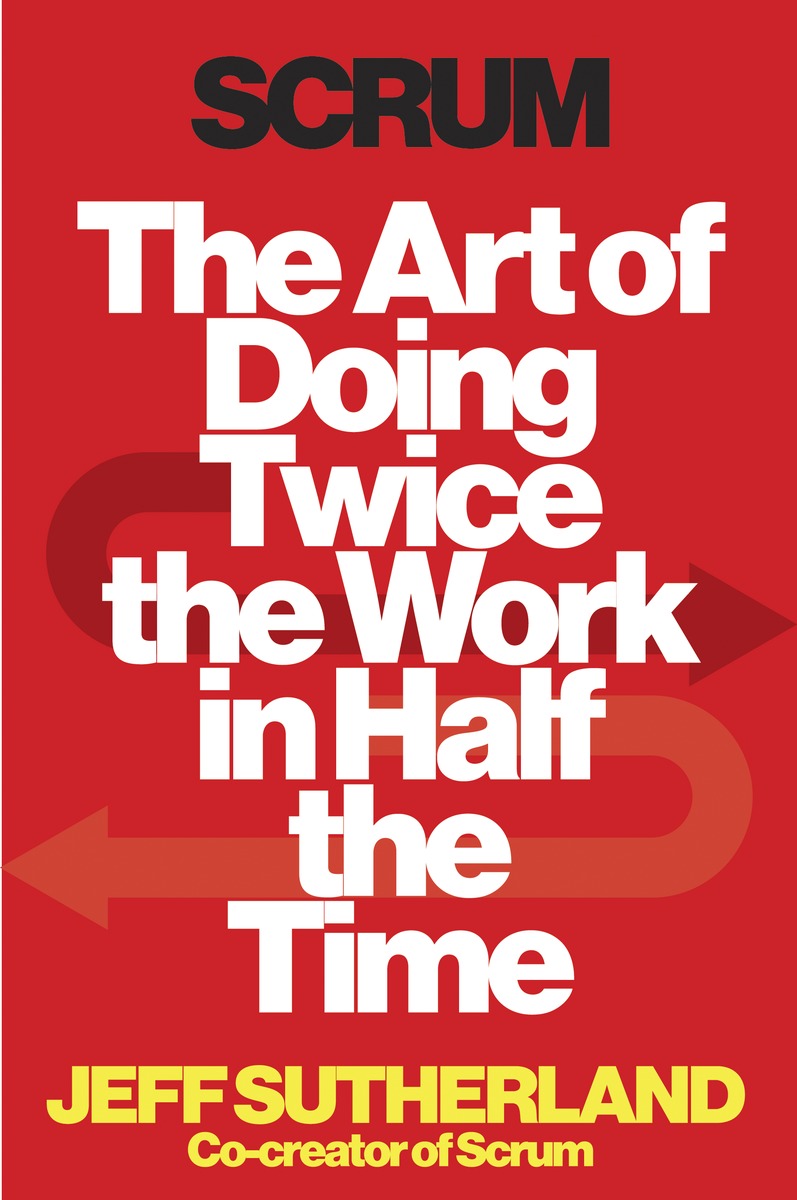
scrum

This book made me rethink how I oversee projects.  For our student ministry team, projects are a big part of what we do.  We approach our camps, retreats, trips and the entire summer like many organizations approach projects or new products.  I think I have a lot to learn from principles that guide the technology industry or lean manufacturing.  I’m very interested in adopting the Scrum approach for project management.

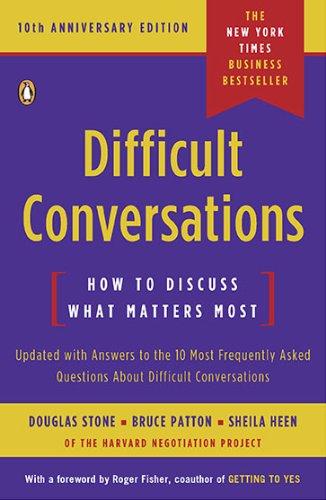
51vFzqIH9uL

My wife and I read this book with a couple we are mentoring.  This is a great book, particularly if you grew up in a strongly passive aggressive family, like I did.  This book teaches a method for talking about difficult issues.  I found it to be very helpful.  I’ve used principles from this book to discuss difficult issues with volunteers, staff and my family.

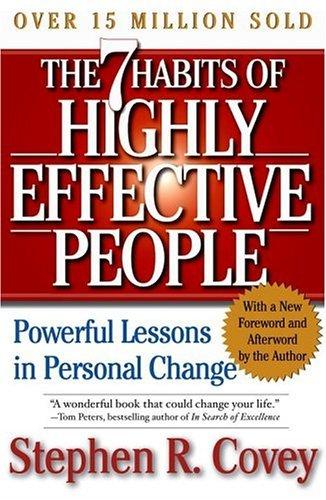
The_7_Habits_of_Highly_Effective_PeopleThis book is old school but so good!  It’s one of those books that you should re-read every few years, particularly if you are in leadership.  If you’ve never read it, you should pick it up.  It will help you define and organize your life around what you truly care about.

7000924

I met this author at the Hutchmoot conference in Nashville this fall.  He is part of the Rabbit Room.    I liked this book because it is historical fiction, which I enjoy and because the author is a follower of Jesus but the narrative doesn’t follow the prescribed Christian novel script.  I’ll just say it, I like a story with a little darkness because it feels more authentic.  Sometimes the typical Christian novel feels a little too plastic.  Also, there are pirates in this story, so it’s hard to go wrong.

cover

Jennifer Trafton was also at Hutchmoot this fall and unless I am completely out of my mind, I believe she is married to Pete Peterson (the author of the previous book).  I read this book to my kids at bedtime and it was perfect!  They loved it.  It stimulated their imaginations like crazy.  In fact, as we read, my son built Lego scenes and characters to match the story.  It was really fun.  If you have early elementary aged kids, this book is great.

The Magic of Collaborative Space

This year we stuck it to the man.  We said down with the establishment!  OK, it wasn’t quite that intense but we did do away with our desks and cubicles and transitioned to a more collaborative space.  The change has yielded great results for us.  Here’s what we did:

LL Office 1


How do you promote collaboration among a team?  First, you do away with traditional desks and create a collaborative workspace.  Second, put in soft seating.  It’s great for conversation.  Third, put a giant TV and cowboy hat on the wall.  Actually, the TV is pretty great for team meetings but the cowboy hat is leftover from a ridiculous leader retreat video.  We aren’t very good at throwing things away. LL Office 2

In my opinion, the best part of our office is our ginormous glass board.  This is the hub of creativity and collaboration.  This board was expensive but definitely worth the money because it looks classy, won’t wear out, and it’s HUGE!  You wouldn’t believe all the genius ideas on there.

LL Office 3Offices have a reputation for being boring and stuffy.  Being a team of youth pastors, we obviously wanted none of that!  To lighten the mood and inject fun into our space, we stretched many of our old t-shirts over frames and made them into what you see here.  Now we have unicorns, mustaches, and narwhals all over our walls.  It’s basically perfect.  This was an idea we stole directly from Elle and Kenny at Stuff You Can Use.

PS…all those boxes you see in the background are Operation Christmas Child boxes our small groups put together.  There’s over 100 of them!  The boxes are a good reminder that our space is designed to promote great student ministry.  We absolutely love what we do and can’t believe we get paid to do it!

Something New and Awesome

Hey student ministry type people!  I want to share something new and awesome with you.  My friends Kenny and Elle are launching Youth Ministry Answers–a new podcast from Stuff You Can Use.

ANSWERS-from-SYCU

The premise of the podcast is pretty simple:  You ask questions and they search for answers.  I’m pretty pumped about this new podcast because Kenny and Elle are top notch.  I’ve talked with them a few times at various reThink events and I’ve always been impressed.  Their Stuff You Can Use site is one of my favorite student ministry resources.  In fact, their creativity inspired the Lifeline office redesign, pictures of which I’ll be posting later this week.

Be sure to check out Youth Ministry Answers…oh, and they’re giving away free stuff this week!


Will Our Kids Succeed?

Recently, I read “How Children Succeed” by Paul Tough. It’s a fascinating book about the psychology and sociology behind success.  The ideas presented in the book have helped me rethink what is most important in parenting.

As a parent, I’m constantly focused on two things:  excellence in the classroom and moral character.  If I’m honest, I want “A”s and good, moral behavior.   I’m particularly vigilant about honesty. I deeply desire for my kids to grow into adults who speak the truth and easily gain trust with others. What I’m realizing, though, is that moral character is only part of the equation for successful kids.

I grew up in one of those families that is dominated by the family business. We’re a water well drilling family and have been for years. I am a 5th generation water well driller, or at least I was, until I became a student pastor.

Growing up, my father developed in me a strong work ethic. From an early age, I was expected to chip in, work hard and problem solve. I want to see these traits in my kids as well, but I’ve never been able to describe what I want with any sort of clarity until I read “How Children Succeed.” Paul Tough breaks performance character into 7 qualities.

1. Optimism

3591932941_5ffff0328c_m

Kids who grow into successful adults tend to look on the bright side. They believe in their future and they are able to set goals and run after them. Put simply, kids who succeed believe they will succeed.

2. Zest

2513923598_d47446f6a1_m

Life is an adventure. Kids who succeed, do so, because they bring energy and zest to the challenges and opportunities before them. Rather than becoming paralyzed with fear of the future, challenges energize successful kids and activate their inner drive.

3. Self-Control

4057468006_aceb570a98_m(1)

Success often involves delayed gratification. For example, good grades usually require doing your homework before plopping down in front of the TV. For kids who grow into successful adults, learning self-control is a key ingredient.

4. Grit

4948291431_6e0db8b6e0_q

I love this word. Grit is that quality that enables a person to push through. It’s when a child initially fails, but picks himself off the ground and powers through to the finish line. People with grit never give up and never quit.

5. Social Intelligence

7223675784_229cba97a8_m

Kids who grow into successful adults learn how to navigate society. They learn acceptable social behaviors, how to influence others, how to listen and how to engage in teams.

6. Gratitude

4785273938_eefac2407a_m

Gratitude is simply thankfulness for the blessings of life. Kids who learn gratitude become adults who are satisfied with what they have been given. They don’t need the next shiny thing and they are capable of staying committed to important relationships.

7. Curiosity

37039048_145d2bf9a2_m

Curiosity has unleashed every major techological breakthrough in human history. Every significant advancement in human society has been born out of, “What if?” Children who grow into successful adults–adults who change the world for the better, are driven by curiosity. They just have to know, understand, and see what happens.


Obviously, I believe that education is important, but if the basic premise of this book is true, the character we develop in our kids is far more important than what they learn in the classroom.  How they go about education and what they do with education, as filtered by their character is what will determine success.  I’d almost go as far to say that how we play with our kids is more important than what we formally teach them and surely how we model is definitely more important that what we speak.  What are your thoughts?


Grit photo credited to filin ilia – aliyo.hu via Flickr

Self-control photo credited to Robert Plaskota via Flickr

Zest photo credited to Tambako the Jaguar via Flickr

Optimism photo credited to Quinn Dombrowski via Flickr

Curiosity photo credited to Broterham via Flickr

Thankful photo credited to MTSOfan via Flickr

Social Intelligence photo credited to Philippe Put via Flickr

How To Thrive in Ministry for the Long Haul

Is anyone else tired?  Have you noticed that ministry is exhausting?  Over the last year and a half, our church leadership has transitioned me from a high school small groups coordinator to leading our student ministry team of 13 staff.  I love my job and my team is phenomenally talented and fun.  However, the workload, responsibility and stress can be a overwhelming.  In my most tired moments, I wonder how long I can last.  Let’s be real, not many pastors are still thriving after a decade or more of ministry.  That’s why when someone who has been in the game for decades still loves ministry and leads with passion and grace, speaks about thrive in ministry for the long haul, I listen up and take notes.

Last week, our senior teaching pastor, Jeff Manion, shared a few thoughts on how to keep yourself fresh and vibrant through years and years of ministry.  He’s in his early 50s and still leading and teaching with passion.  Jeff has been leading our church for somewhere around 30 years and he has he energy of a 25 year old.  Here’s what he shared about thriving in ministry over the long-haul.

13965306323_17d0a8f644_z

The overall image that Jeff shared was of being poured out.  In ministry, the work, the conversations, the crises, and everything else, require that we pour ourselves out on a weekly basis.  In order for us to pour ourselves out again, again and again, we need to refill ourselves.  What Jeff shared are three practices that refill.

SABBATH

Sometimes, Sabbath seems like one of those Old Testament laws that doesn’t apply anymore.  It was cool for Israel but this is America.  Jeff disagrees.  To him, the practice of Sabbath has been vital to his ability to stay fresh, vibrant and passionate about ministry.  Sabbath is not a day off.  It’s not a day when you exchange to-do lists.  Instead, it’s a day in which you don’t have a to-do list.  It’s not, “What do I need to do today.”  It’s, “What do I want to do today?”

3777040907_c7610fb2d5_o

Is there a day in your weekly schedule in which you simply unplug and do things that give you life?  If not, you may be in danger of pouring yourself out without a means to resupply.

FRIENDS

I’ve blogged before about how ministry has a way of turning even the most die-hard extrovert into an introvert.  Ministry is about people, and it should always remain that way, but the truth is that when your entire world revolves around serving, listening, speaking, and helping people, you find yourself in desperate need of getting away!

I’ve heard this argument many times but Jeff put a fresh spin on it.  What he argued is that what is needed here is friends.  In ministry we have a million acquaintances but what we are desperate for are deep friendships.  One of the keys to thriving in ministry over the long haul is to identify the people in your life who are deeply enriching, life giving friends, and then organize your calendar around these life giving relationships–create space for them to grow.  Invest in the friendships that give you life.  Spend inordinate amounts of time with the people with whom you can be honest, real and raw.

When you have friendships in your life in which you can unplug, unwind and come unhinged, you are ready for ministry for the long haul.

RELATIONSHIP

I think Jeff’s most important statement in his conversation with us was this:  “The best thing you bring as a leader is not your talents and abilities but a relationship with God that is worth having.”  In the end, ministry is living out your relationship with God in front of and with other people.  Said another way, you can’t lead people where you haven’t been.

4543063042_6fdfde32e4_z

Sometimes it’s hard to remember that it’s all about God and our relationship with Him.  Sometimes I get so caught up in the programs, numbers, issues, crises and events that I forget that eternal life is all about “knowing Jesus.”

So, if like me, you’re experiencing a season of exhaustion, I would plead with you to make sure you are refilling and recharging by focusing on sabbath, life-giving friendships, and the relationship that matters the most.  I’d love to hear your thoughts on this, particularly if you’ve uncovered other ways to thrive in ministry for the long haul.


road image credited to Mark Sebastian via Flickr

bench image credited to Oliver Kendal via Flickr

Bible image credited to Ryk Neethling via Flickr