New LifeLine Video: Mission Trips Reveal

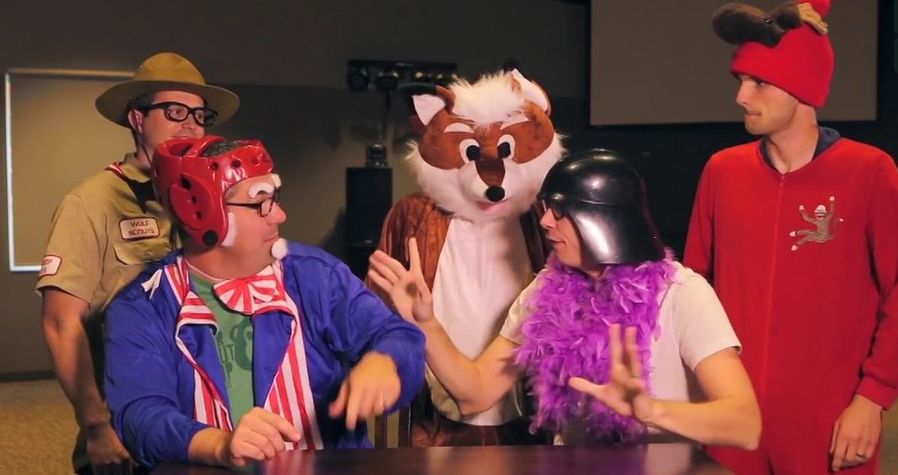
This week we revealed our summer mission trips to our student and volunteers with a ridiculous video.  I mean, how else would you do it?

Announcement: Knapp & Cascade Mission Trips from LifeLine Student Ministries on Vimeo.

This year we are hoping to send 270 students on mission trips.  That’s way too much paper! Have you noticed that some mission organizations require a tree’s worth of paperwork?  Thankfully, our resident web genius, Jon VerLee designed this registration page for us which streamlines the process and saves the rainforest.

LifeLine Missions Registrations


If you are a youth worker, when and how do you reveal your mission trips?  Also, how do you do registrations and collect paperwork?


Cancel Sunday School

Delorean badge. Cannon Beach Ferrari Show

What would you do if you could go back in time and undo something in your student ministry?  Maybe you’d undo your youth group name, “BOB”—Bunch of Believers.  Or perhaps you’d like a mulligan on that youth room color scheme that was so hip back in ’83 “when you could still throw a football over them mountains.”

Want to know what I would go back and undo?  Sunday morning programs.  No, not all the church services!  Sheesh, I’m not that crazy.  I’m talking about high school programming.  Let me explain.

When I launched out as a youth pastor ten years ago, I inherited a Sunday morning high school program that was on life support.  My superiors charged me with bringing it back to life so that’s what we did.  By the end of my first year we had grown the attendance by 80%.  At first, I assumed that this reflected how awesome our high school program was—and by extension how awesome I was as the youth pastor.

Our Sunday morning program was so epic that students liked it much better than the adult church services.   I began to notice that the students would either sneak back into our junior high program the following hour or jump in their cars and hit up the local coffee shop.  Very few of them were attending the adult church service.  I was so blinded by the numbers and the positive attention I was getting from leadership that I never bothered to think through the ramifications of what was happening.

Even worse, when I heard students complaining about how boring the adult services were, I kind of liked it because what I was hearing was, “What you do is awesome.  What they do is boring.”  Call me a jerk, but I like to be awesome.

After a few years (I’m a slow learner) the flaw in my approach finally dawned on me—like a pile-driver to the face.  I realized that when our seniors, who had been regularly attending our high school program but not the main services, graduated from our ministry they disappeared.  Sometimes they found a church that better suited their tastes but more often than not they peaced out from church all together.  This is one of the great regrets of my life.

When students walk away from faith, we as youth workers are quick to blame the student, parents or culture.  “Well, I’m sorry but he shouldn’t have been hanging out with those guys.”  “His parents were just clueless!”  “Our culture is just so messed up, it’s practically impossible for kids to stay committed these days.”

Although it’s much more painful, I think it’s far more valuable to look in the mirror and to evaluate our structures and programs.  The logical reason my students were walking away from church is that I was training my students to walk away from church.  How?  I was isolating them from the church services and community.  When they graduated from my ministry they didn’t possess the tools or desire to integrate into the larger body.  For many, this was the end of church.

So what would I do if I indeed did have DeLorean?  I’m glad you asked:

  • cancel Sunday morning high school programming
  • encourage high school students to attend church with their families
  • encourage students to serve in the children’s ministry/junior high/larger church body (if you have 2 or more hours of Sunday morning services)
  • refocus high school youth group programming to Sunday night or Wednesday night
  • build the high school youth program around solid teaching and adult mentor relationships

That’s it.  Oh, and if you do happen to have a DeLorean…CALL ME.

Why You Might not Enjoy Talking to Jesus

Growing up, I understood Jesus to sort of be this smiley, tousle your hair grandfather figure.  I imaged that talking to Jesus would be like talking to my great grandfather who was fond of gifting me with loose M&Ms out of his shirt pocket as he dished out depression era wisdom.  I’ve since learned how weird the M&M thing was and how different Jesus is from my childhood imaginings.

YEAH BUT THOSE HUSBANDS THO…

Recently I reread the Gospels and noticed that Jesus was actually rather awkward in his conversations.  What I mean is that He was blunt…really blunt.

One of my favorite scenes of the Gospels is when Jesus talks with the woman at the well.  After offering her living water that will never leave her thirsty he says something you just don’t say to someone.

“Go, call your husband and come back.”

I have no husband,” she replied.

“You are right when you say you have no husband.  The fact is, you have had five husbands, and the man you now have is not your husband.”

If Jesus’ disciples had been around during this conversation, I imagine they would have pulled Jesus aside and whispered, “You gotta stop.  This is uncomfortable!”

And, I love the woman’s response, “’Sir,’ the woman said, ‘I can see that you are a prophet.'”

I’m about as far as it gets from a linguistic expert but my translation of the Greek is basically, “OH CRAP!”  Her past has been exposed and she’s uncomfortable.  What is it about Jesus?  Why does he dig like this?

WHAT ABOUT YOU?

In the Gospel of Matthew there is another awkward conversation in which Jesus asks hard questions.

When Jesus came to the region of Caesarea Philippi, he asked his disciples, “Who do people say the Son of Man is?”

They replied, “Some say John the Baptist; others say Elijah; and still others, Jeremiah or one of the prophets.”

“But what about you?” he asked. “Who do you say I am?”

If I were one of the disciples I would have probably slipped into a nearby cave.  What’s up with Jesus being so blunt?

TREASURE IN HEAVEN

In what I would consider to be the most awkward conversation in the Gospels, a young man runs up to Jesus and asks how to get eternal life.  Jesus tells him he should obey the commandments.  The young man responds by saying he is.  Then Jesus drops an awkward bomb.

Looking at him, Jesus felt a love for him and said to him, “One thing you lack: go and sell all you possess and give to the poor, and you will have treasure in heaven; and come, follow Me.”

Uh…what?  Is there a baby step option here?

THIS IS FOR YOU

One thing I know from reading the Gospels is that Jesus is always about others.  Everything that he does and says is for the benefit of the people around him.  So, there has to be significance to his awkward bluntness.  Maybe it’s that Jesus knows that there is no growth without honesty.  There is no transformation without truly looking in the mirror.  There can’t be freedom without understanding what it is that has you in bondage.

Every awkward conversation I referenced was an opportunity for growth.  Jesus forces the woman at the well to admit who she really is.  Jesus demands that his followers admit what they really think and believe and Jesus reveals to the young man that he is a slave to money.

I used to believe it was better to mind my own business and I hated it when friends bluntly identified inconsistencies in my life.  Now, I’m realizing that maybe awkwardness leads to maturity and bluntness might just be spiritual.


image credited to cowfish


Life According to Oregon Trail

As a kid in elementary school, I lived for one thing: Oregon Trail.  I’m not sure I learned anything in the classroom because my mind was constantly wandering off to the computer lab.  Nothing my teachers had to say remotely measured up to the captivating power of Oregon Trail.  I was obsessed with this game and learned some key life lessons from playing it.

I learned that life is hard.

51653-oregon_trail

I learned that hunting is easy.

oregon-trail

I learned that the West isn’t nearly as beautiful as you might have supposed.

20061002oregon8

But most of all, I learned that there is something transformational about a journey.

oregon-trail

My favorite kind of story is a travel story.  I can’t put down books like Through Painted Deserts by Donald Miller.  I planned my own personal hiking adventure 14 times during A Walk in the Woods by Bill Bryson.  For days I debated whether or not I could build a time machine after reading about Lewis and Clark in Undaunted Courage by Stephen Ambrose.  Oh, and let’s not forget about those few months when I considered selling it all and buying a vintage sail boat while reading, Sailing Alone Around the World by Joshua Slocum—which is a must read by the way.  There is something about an epic journey that captivates in a way no other story can.

I guess I should redefine my obsession with journeys a little.  I love reading and fantasizing about journeys but I’m actually rather uncomfortable with them in real life.  This whole thing about overcoming conflict to get what you want is sort of annoying.  The truth is, I want to overcome conflict right now.  Actually, I’d rather not have any conflict at all.  I’d much prefer to get what I want right when I want it without any sort of conflict.

And yet, I’m beginning to understand that a journey without conflict is rather like a trip to the supermarket.  It lacks meaning.  Why?  Because it doesn’t involved conflict.  An old lady stealing your favorite parking spot doesn’t qualify as conflict.

In our culture, we’ve grown accustomed to bypassing or removing all conflict from our lives.  We are obsessed with safety and comfort. Don’t get wrong, I appreciate safety and I enjoy a good recliner as much as the next guy but I’m starting to think that removing all possibility of conflict isn’t exactly a good thing.

The truth is that conflict makes you a better person.  Conflict provides opportunity for growth that otherwise wouldn’t exist.  When my wife and I attempted to adopt an orphan teenager from Ukraine we began a long and exhausting journey that ultimately ended in failure and heartbreak.  You might say, we never made it to Oregon.  Our covered wagon was swept away in an attempt to ford the Mississippi.  If you missed this story, you can start it here.

Stories have the power to deeply move us and some of the most meaningful stories end tragically–think Romeo and Juliet.  Sometimes the protagonist doesn’t get what he wants.  Sometimes Jenny repeatedly returns to her destructive path and Forrest loses her.  The thing is, the story isn’t less meaningful because it didn’t end happily.  In fact, you could make an argument that it is more meaningful because it didn’t.

Our adoption story is packed with meaning even though it didn’t end the way we wanted.  Because of the pain we’ve grown in meaningful ways  Because of our adoption journey we became more compassionate and more resilient.  Our children’s eyes were open to the plight of orphans and they began to respond with compassion themselves.  Our faith was tested but in the end we learned to trust God more than ever before.

All this is to say that the journey is worth the price–whether you make it to Oregon or not.  Who you are on the other side is worth effort and the pain. There is meaning in the conflict.  Whether you overcome the conflict or not, there is transformation in the journey.


image credited to oblomberg

How Love Overthrew an Empire

A few weeks ago we finished up a series on influence that we called Wakes.  I loved the imagery that Al, our production coordinator used for this series.  We borrowed (with permission) footage from a friend’s wake boarding Vimeo page and added text and music to it.  The combination of Johnny Cash and wake boarding ended up being pretty boss.  I was really happy with how the entire series turned out.

Wakes Bumper from LifeLine Student Ministries on Vimeo.


One of my favorite teachings from this series was on love and how the early Christians essentially overthrew a repressive empire without the use of force.  Check it out:


Wakes – Love from LifeLine Student Ministries on Vimeo.

Tenacious Mothering

Somehow my daughter turned 21 a few days ago.  I still don’t really understand how this happened but I can assure you it has nothing to do with me getting older.

When I announced to a close friend that Melanie was going out that evening to celebrate she shocked me with a question I didn’t know how to answer

“Did you tell her not to take a drink from anyone she doesn’t know?”  “Well, no…I didn’t tell her that.”  “Because you never know what someone could put in a drink before they give it to her…”

Needless to say, I freaked out and left my daughter a long impassioned voicemail that went something like this:

“Don’t take drinks from strangers and don’t ever go to the bathroom by yourself and don’t drink anything that is made in a garbage can or a bath tub and don’t do shots because they make you stupid and don’t drive even if you’ve only had a few drinks and don’t go anywhere with anyone you don’t know and most guys you meet in a bar are trying to figure out how to get in your pants!”

Yes, I panicked.  My sweet little innocent baby girl was going out into the world and I wasn’t sure if I had said everything that I needed to say so I just opened up the fire hose and left nothing to chance.

The good news is that I haven’t left much unsaid over the last 21 years.  I was always the mom who said the weird awkward things.  I talked to her about sex and boyfriends.  I talked to her about catfights and how boys really think.  I talked to her about what it feels like to have your heart broken.  I talked to her about being resilient.   I was open and honest and brought anything that she tried to keep in the dark out in the light.   Sometimes it went really well and sometimes it was messy and ugly.  But either way we talked about it.

So whether you have a 1 year old or a 21 year old, my advice is this:  start talking.  Whatever age you think you should start talking to your kids about sex, partying and friends—start earlier than that.   If you have a teenager, start now.  Be weird, creepy, and awkward.  At least they’ll know what creepy sounds like when they run into it.

Ask them questions even if you’re afraid to know the answers.  I know it’s a tough idea to implement but be persistent and relentless and for crying out loud man up!  No one ever said parenting would be easy.  If your kid isn’t ticked off at you at least 30% of the time you’re probably not doing it right.

Trust me when I say that down the road your kids will appreciate your intrusiveness.  A couple summers ago my husband and I dropped Melanie off at her first apartment in Chicago.  As we drove away I was shouting obnoxiously out the window “Don’t let a stranger carry your groceries!  Nothing good happens after midnight! Always park under a streetlight!”  And on and on until we wear out of earshot.

She just smiled and waved and I was sure she knew how tenaciously I love her.

Christina


Guest Blogger:  Christina Thelen has been serving in student ministry for over 8 years and has been tenaciously mothering for over 21.  When she isn’t volunteering with students she can usually be found planning epic events or posting cat pictures to Facebook.

Small Group Fail

Do you ever feel like you totally dropped the ball as a small group leader? I don’t mean those times where you go in for the appropriate side hug and get full-frontal attacked by a student, or the times you make some awkward comment to a 9th grade girl about her boyfriend without knowing they broke up two hours earlier. I’m talking about times that you flat-out fail on your own merit.

In case you hadn’t guessed, I am no stranger to those gut wrenching evenings of small group time where nothing is accomplished and the only one to blame is yourself. For me, I particularly get caught up in the “not being prepared” vain of failure. It’s not that I don’t think preparation is important, I just run out of time (so I tell myself). Annoyingly, I’ve discovered that when I do prepare, my small group is typically inattentive, and when I don’t they’re more ready to listen then ever—and I have nothing to say. Knowing I’m responsible for dropping the ball in those cases invites a very different feeling in me than when something I try simply doesn’t work. I’m sure you are all too smart for this, but I sort of have a tendency to beat myself up when this happens—because as the leader, I’m supposed to be the holy one, right? Not the unprepared, lazy kid. It’s in these moments that I think, “Who the heck let me in here?”

Yet when I have utterly botched up small group leadership and feel I am no longer worthy to be a leader, I remind myself of a few things. If you’ve ever been there, I invite you to scan this list as well. I know you already understand that God’s bigger than your stupid moments, but it’s good to be reminded. Here is my reminder list in times of failure:

You are not finished learning

No matter how long you’ve been leading a small group—whether it’s months or decades—you will never be a perfect leader. There will inevitably be days you’re not prepared, days you say the wrong thing, and days when no one responds to your questions or jokes. As it turns out, no matter how many people tell you you’re a great leader, you’ll never be done learning what that looks like. (There’s a head shrinker for you.)

The group isn’t lost

If you’re an invested leader who tries to build relationships and speak truth to students, one bad week won’t scatter the sheep. In youth ministry, we like to remind our leaders about how little time they have with their students because it’s good for them to feel urgency with kids they often see only 30 times a year (or less). But while it’s good to be reminded of how little time we have, it’s also good to keep in mind that one bad week is still only 3% bad in a year. The rest of the year could be 97% good! Don’t beat yourself up, just strive to grow toward that new 97% goal. (I guess you could strive for extra credit and take your kids out to ice cream too, but I’m not guaranteeing you’ll get your 3% back.)

Tell ‘em: adults mess up too

It’s easy to tell our small group kids that they need to own up to their messes (because let’s be honest, many of them have obvious messes to clean up). It’s a lot harder to admit that we screw up too. Talking about past mistakes you’ve grown out of is one thing, but admitting you still mess up is another. Yet I think if we miss out on these opportunities to tell our students when we drop the ball, we miss showing them what confession looks like. Some students may not have ever seen a real apology.

You screwing up is an opportunity to:

  • model what it is to ask forgiveness, even for something small
  • model humility as a leader

You’d be surprised how much respect you can gain by admitting you’re still not perfect. I mean, don’t make it a habit or anything, but a one-time screw up could actually draw your group closer to you.

So next time you don’t prepare, or you lose your temper, or you roll your eyes when you should’ve said something supportive, remind yourself of these things. And most importantly, keep going. Our enemy would like you to give up; God’s given you the grace to move forward. If you haven’t noticed, he’s pretty good at using imperfect people to turn out epic results.


Guest Blogger:  Elisa Talmage has spent over six years as small group leader of kids from 4th to 9th grade.  She is now on staff as the Female Small Groups Coordinator at Ada Bible Church and is currently pursuing a Master of Arts in Counselor Education. Elisa grew up in Cleveland, Ohio, where she and her husband met in fifth grade.


image credited to Chuckumentary

The Secret Power of Memories

I’ve learned that memories are a powerful.  Good childhood memories have a way of evolving into magical nostalgia.  Maybe I’m the only one who romanticizes the past and remembers things a little differently than they actually occurred but I have a feeling you do the same thing.

As a parent, I accidentally stumbled upon using memories as a secret weapon.  You see, I have a semi-famous artist sister who lives in Portland, OR with her shoe designing husband.  They are both artistic and adventuresome so they are exciting to be around and you occasionally score free shoes and paintings which is nice.

The thing is, Oregon has this reputation for being beautiful and incredibly quirky—the kind of place you just have to visit.  So, I decided to fly to Portland with my son and spend a week climbing mountains and visiting coffee shops with my sister and her husband.   Secretly I was hoping to run into Donald Miller…but this story isn’t about me.

Anyway, I intended this trip to be an adventure for my son and I and it turned out to be a partial disappointment and a landmark success.  You see, as it turns out, 5 year old boys aren’t terribly great mountain climbers.  Our first day of adventuring took us to various waterfalls around the Columbia River Gorge.  Keegan did well on the first hike and then fell to pieces on the next eight.   I’ll have you know that carrying a 50 pound kid around hiking isn’t exactly paradise.

IMG_1461

At this point we realized that our planned wilderness backpacking trip was never going to happen with a 5 year old.  Undaunted, we scheduled a weekend camping trip at Crater Lake and had a great time.  I was enraptured with the natural beauty of everything I saw in Oregon.  I mean, how are you gonna have a temperate rainforest, volcanoes, and the ocean all in one state?

IMG_1551

The truth is that Keegan didn’t much care for the scenery.  He was excited about finding a snake but other than that the best part of the trip was when he uncovered that his uncle Eric had a Super Nintendo with Super Mario Sunshine.  After wandering all over the state and the city, all Keegan wanted to do was stay up late and play video game that’s over a decade old.  So that’s what we did.

Upon returning home, I felt like we needed to return to Oregon the next summer so that we could more seriously tap into the potential of Oregon but I soon discovered that Keegan didn’t feel that way at all.  I can’t tell you how many times Keegan has asked me if I remember when we got “those little pizzas” in the Denver airport?  To him, that was amazing.  “Daddy, do you remember when we got that Italian pop?  That was my favorite! “   “Daddy, do you remember when we saw a starfish at the spacific ocean?  That was so cool.”  “Daddy are you sure Sasquatch isn’t real?  Because maybe you’ve just never seen him” “Daddy, do you remember Eric’s Gollum voice?  How come you can’t do that?  “Daddy, do you remember when we Stephanie said people can ride their bikes naked in Portland?”

IMG_1479

The truth is that Keegan had the most epic vacation and the fact that it was just him and I traveling across the country made it a legendary experience.   A few weeks after returning, my wife made Keegan a Shutterfly book of our trip.  Even now, 2 years after the trip he still reads that book nearly every night as he lies in bed waiting for sleep to overtake him.  The memory of that trip has taken on magical qualities.

It was a fun trip but the point is that for a little boy, an adventure with his dad was a milestone experience.  His memories of that trip will forever overshadow what actually happened.  The trip has given us a shared point of reference.  No future conflict or disagreement, no teenage angst or middle aged father stubbornness will ever be able to take away the magic of a week in Oregon.

What I learned from a week in Oregon is that taking the time to adventure with your kids, specifically one-on-one is worth the investment.  It may just be the most strategic thing you ever do.