My June Reading List

June was a good month for reading.  There’s a few gems in this list…

5179uNrWkYL


If you aren’t reading this series you need to start!  I’ll be honest, I wasn’t terribly impressed by the writing in the first book but now I’m all in.  I was up late into the night finishing this book off.  The series has great characters, a compelling plot and a boatload of meaningful metaphor.  Peterson’s endless creativity is engaging and fun.  I can’t wait to start the final book.

weird

I’m a little late in the game on this book but I enjoyed it immensely.  Wait, enjoyed might be the wrong word.  It was uncomfortable.  In a good way.  It was spiritually challenging and I immediately wanted to create a teaching series around the material.  That’s what teachers do with great books.  We steal the material and pretend it was our idea.  Don’t worry, you won’t be able to tell what I did.  The series is going to be called “Strange.”

9780814432174_p0_v1_s260x420Sigh.  I hate it when this happens but I just didn’t enjoy this book.  I couldn’t connect.  The title lured me in.  Liberating creativity in my team is a passion for me but this book was too tied to the technology sector and I didn’t find the personal stories helpful.  This book just wasn’t for me.  It could be that I’m not smart enough for the world of technology and business.
 

leaders-eat-last

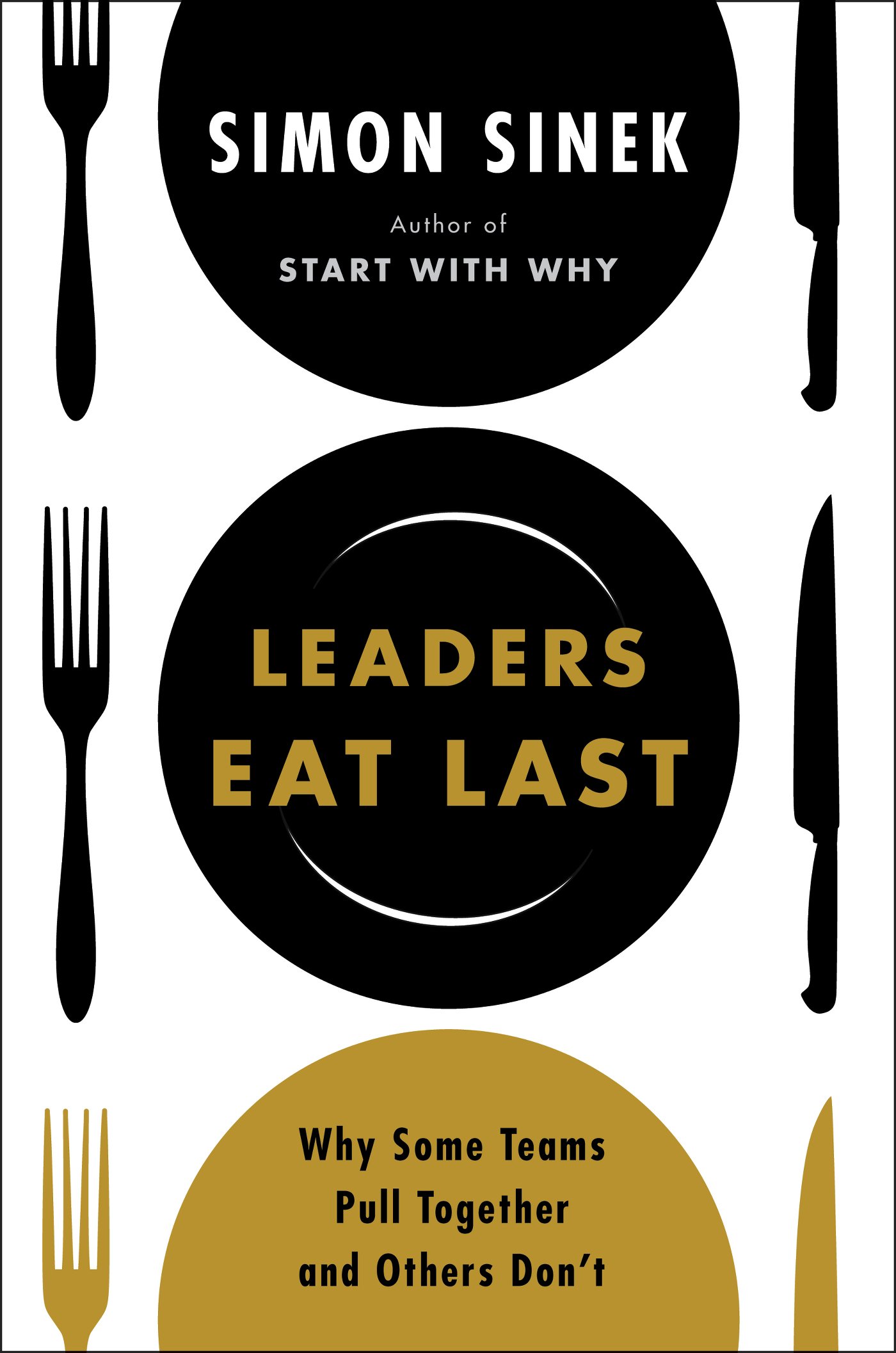
I LOVED this book!  Sinek’s thesis deeply resonated with me.  Here’s the basic idea:  Organizations that treat people like people and foster environments of collaboration and relational safety thrive while organizations that treat people like cogs in a machine and competitively pit people against people don’t.  Organizational cultures are built by the leaders at the top.  To Sinek, the role of the leader is humble servant-hood.  Sinek’s idea of leadership fits well in the church.

A word of caution on this book, Sinek’s route to servant leadership runs through an atheistic and evolutionary worldview.  He believes that the key to successful leadership is understanding human biology, specifically the brain chemicals that drive our feelings.  Some of my more conservative friends may disagree with his worldview to the degree that they cannot agree with his conclusions.  I had no problem walking that line.  Sinek repeatedly referred to “mother nature’s design.”  Personally, I’m comfortable with his route and conclusions because I replace “mother nature’s design” with “intelligent design.”  In fact, I can’t understand how unguided evolution could design anything.  In my opinion, there must be an architect.

Anyway, the book is awesome.  If you’re in leadership, read it and let me know what you think.

The_Fault_in_Our_Stars

10 pages in I was like, “Psh! What a setup.  I refuse to get sucked in.”  50 pages in I was like, “What do teenagers know about love.  I’m not gonna get sucked in.” 100 pages in I started to get sucked in by Augustus’ charisma.  150 pages in I couldn’t stop reading.  200 pages in I cried like a little sissy girl.  Dang it.

The Road Cover


I’m not sure what’s wrong with me, but I love a good post-apocalypse story.  This book is intense but I loved it.  However, you’ll probably fall into a depression after reading it.

 

A Case Against “Christian”

Warning:  I’m feeling a little feisty.  This may ruffle some feathers.


Let me begin by stating that I am a Christian.  By that I mean that I follow the Christ, Jesus of Nazareth.  However, I wish I could outlaw the term, “Christian.”  By this, I mean the adjective.  Why do we, as Christians, have to create competitive sub-cultures, institutions and industries–Christian music, Christian movies, Christian bookstores, etc?  I don’t see how these help the movement of Jesus.

In my opinion, here’s why Christian subcultures and competitive industries don’t work:

1.  They make us look inept.

When’s the last time you saw a “Christian” movie that was competitive with something Hollywood produced after 1972?  I have an acronym for you:  CCM.  I rest my case.  Our “Christian” industries are a collective “face-palm.”  Our shoddy art places Jesus in a laughable and irrelevant light with society.  This is not OK.


2.  They set us up for failure.

How many news headlines over the last few years have been of “Christian” leaders making terrible decisions–illegal and immoral?  So often, the strategy of Christians seems to be: “We’re better than you, therefore, let us set up a more holy insert blank.”  The problem is that Christians are NOT better than the rest of culture.  We are often NOT more holy.  We are simply people who embrace the love and grace of Jesus and seek to follow Him.  This superiority complex has to go because every time one of us makes a terrible decision we damage our credibility.  Yes, we need to strive for holiness but I believe we ought to stop placing ourselves on public pedestals.

3.  They set us up for conflict

Why is everything a battleground?  We seem to be obsessed with battling over the morality and culture of the United States, thinking that somehow it is THE kingdom, when in fact, it is A kingdom.  We have this nasty propensity to set up opposing institutions and industries in order to battle the “sinful” institutions and industries.  By embracing this strategy, we’re teaching the next generations that being a Christian is about fighting the bad guys.  We tried that once.  It was called the Crusades and it sucked for everyone.


4.  They make us irrelevant

Jesus was absolutely compelling.  The worst of people were magnetically drawn to Him (and He to them).  Our Christian cultural bubbles are the farthest thing from compelling.  In fact, these cultural bubbles disengage us from society and culture.  Our teaching and conversations become irrelevant to the people and communities around us.  Our language doesn’t even make sense to the people Jesus wants to engage.


So what’s the answer?  Jesus called His followers to be “in the world but not of the world.”  In other words, the answer is to engage culture instead of creating subcultures.  Instead of fighting, we ought to focus on loving, serving and sharing Jesus.  What did the early Christians do?  They rescued and raised abandoned babies.  They stayed in plague-ridden cities and cared for the dying.  They engaged false philosophies smartly and relevantly.  They contextually shared the Gospel with the people they loved, which was everyone.  Within the Church, they loved and served each other so powerfully that outsiders were dumbfounded and longed to join their communities.  The early Christians built credibility through the way they engaged and treated others.

Jesus gave His disciples a commandment:  “Love one another as I have loved you.”  Instead of creating enclaves of finger wagging disapproval and judgment, let’s love each other profoundly and tangibly and let’s engage culture by serving our “enemies.”  No more, “Us against them.”

And, as safe as it may make us feel, isolating ourselves in “Christian” bubbles with Christian movies, music, t-shirts, stores, books and TV isn’t remotely close to the Kingdom living that Jesus described and the disciples lived out.   Let’s return to what has made the Church irresistible throughout history–smartly engaging culture, loving and serving people, and boldly sharing Jesus.

I’d love to hear your thoughts on this…even if I made you angry.


bubble imaged credited to Pascal Maramis via Flickr

Storytelling vs. Preaching

Every so often I run into a blog post or a book that makes me stand up and shout, “Yes!  That’s exactly what I think too!”  It’s a rather exhilarating and embarrassing situation, particularly if I happen to be in a crowded coffee shop at the time of reading.  “Sir, please sit in your chair and act like a normal person.”  This scene most recently happened over this post from Brad Griffin on the Fuller Youth Institute site.

What I want to say here may not be popular with some but I believe in this concept enough to weather the criticism.  Here it is:  expositional preaching doesn’t work with students.  What I mean is that 3 point propositional sermons are an ineffective model for promoting life-change in students and, truthfully, in most adults as well.  There, I said it.

Part of me shutters as I type these words because I grew up in churches where propositional sermons were, and still are, the signpost of ecclesiastical (a big word for church) correctness.  In addition, much of my pastoral training at the college I attended was centered around creating and delivering 3 point sermons.  A few of my profs will probably retroactively fail me if they read this post.

And yet, here’s how I know I’m right:  What were your pastor’s 3 points on Sunday morning?  What’s that?  You can only remember one thing about what your pastor said?  I rest my case.

Please understand that I’m not saying that we abandon the Bible or wimp out on content.  Our teachings must be built on Scripture and include the actual reading and unpacking of Scripture.  What I am saying is that teaching with clarity and great storytelling trumps a deluge of content in every possible way.

Humans are designed to be moved by stories.  God revealed Himself in story–through compelling and conflicted characters, gut wrenching tension and a plot line so incredibly moving that it has been repeated in books and movies over and over again.  It’s the story of the Bible.  My question is:  Why do we take what is compelling and transforming in itself and shove it into a format of communication that sucks all the energy and tension out of the content?

Why don’t we do what Jesus did?  Jesus told stories–powerful, transforming stories built around the truth of Scripture as it existed in His time.  His stories hit people exactly where they were–their occupations, struggles, families, joys, fears and cultural context.  Secondly, Jesus focused his teaching on a small group of 12 guys.  He communicated to the masses and then unpacked his ideas with his 12 over campfires, meals and long walks.  Lastly, His parables typically focused on one idea.  Essentially, he communicated one clearly expressed idea through the vehicle of powerful storytelling.

What can we, as youth workers, learn from Jesus?

  • The most lasting communications are crystal clear.  They communicate one central idea…not 3.
  • The most transformative communications ask you to do something. If we aren’t specifically asking our audience to act, we have failed.
  • The most engaging communications include great storytelling.  We must master the art of story.
  • The most relevant communications lead to further discussion.  Our communications ought to set up meaningful small group conversations.

So, how do you actually teach like this?  Here are a few questions to wrestle with:

1.  Can I boil my communication down to one point?  Can I craft a memorable statement around that one point?

2.  As I communicate, am I putting my audience in the shoes of the biblical characters involved in the story?  Will they feel what the character felt?

3.  Did I take my audience to the setting of the story?  Did they feel, smell, taste and see the places, the people, the events?

4.  Did my audience experience the tension of the story?  Did they care?

5.  Did I demonstrate why my one point matters in real life?

6.  What did I ask my audience to do with my one point?  Give them an assignment.

7.  Did I send my audience to small groups with a compelling question to interact with?

8.  Did I set up my small group leaders with tools to help bring the communication to the lives of my audience?


In order to communicate for life-change.  We must communicate clearly, utilize the power of story, ask them to do something and set up small groups for conversation.  I’d love to hear your thoughts on this.


microphone image credited to Ben Rogers via Flickr

Why Your Kid May Need a Softball to the Face

I’m not an overprotective parent.  I don’t make my daughter put her helmet on when she rides bikes in the neighborhood and I’m annoyed that she has to wear a facemask when she plays the infield (a softball to the face will keep you on your toes). I don’t dispute grades with her teacher or mediate arguments with her friends.  I’ve even been known to let her eat gluten and red dye #4.  For the most part I consider myself a completely normal parent.

However, as my youngest is standing on the edge of entering jr high I’m starting to think that I don’t fall in the normal range anymore.  It seems I’m having more and more conversations that go something like this:

Eliza: Can I have Instagram*

Me:  No

Eliza:  Whhhhhhy?  Every one of my friends has it.  Every. Single. One. It’s not fair.

Me: Fair ended in the Garden of Eden

Eliza: *Blank stare*

Of course that’s not true, they don’t all have Instagram.  But a lot do, which starts to chip away at my resolve.  Then I have to ask myself; am I freaking out….being over protective…depriving her of opportunities to develop discernment?  I don’t think so.   No, I’m definitely right.  Absolutely for sure.  I think.

Being the single voice if dissension isn’t easy.  You become an island, standing alone while everyone is blissfully moving along with the status quo.  Even the most resolute parents can buckle under that sort of pressure.  When you’re the lone holdout you start to hear that voice in your head – the voice that says “Are you sure about this? You’re the only one who is being so difficult.  You’re going to make her an outcast, you know.  She’s going to hate you”   It’s hard to stand up against the norm, and it doesn’t get easier as you go along.  The fact is that parenting is hard and you volunteered for it.  Making unpopular decisions isn’t fun.  When your kids are mad at you it stinks.  But this isn’t about you, it’s about them, and when you cave in because you feel bad, you’re being selfish.

Ultimately there is a reward for towing the hard line.  Your children will become functioning members of society.  They won’t buckle when things don’t go their way.  They will learn coping skills and will know how to react when life isn’t fair.  The reverse is true if you give in every time you get resistance.  They will crumble when they come up against adversity, expect you to rescue them, and probably live in your basement for the rest of their lives.

Look, I am fumbling my way through parenthood, just like you are, doing my best to raise my daughter in a world that is new and scary to me.  I’m using a biblical grid to walk with her through a culture that fights me almost every step of the way.   I’m trying to create a foundation for her that’s grounded on who she is in God’s eyes.  That means that sometimes I say no when everyone says yes.

*Note- if you let your child have Instagram I’m not saying you’re a bad parent.  We all have to pick our battles and that is one that I chose.  I won’t judge you for that and you don’t judge me for wanting my kid to get hit in the face with a softball.  Deal?

Christina

Guest Blogger:  Christina Thelen has been serving in student ministry for over 8 years and has been tenaciously mothering for over 21.  When she isn’t volunteering with students she can usually be found planning epic events or posting cat pictures to Facebook.


softball image credited to yanovsky via Free Images

Why Structure is Everything

The other day, I found myself sitting around a table eating spinach and artichoke dip with my friends Jon and Brian, who happen to be two of the smartest people I know.  In my experience, great food and drink lead to great conversation.  As often happens, we were passionately discussing ministry strategies and philosophies.  Brian made a statement has been rattling around my head ever since.  Here’s what he said:

“Structure unleashes relationship.”

Here’s what followed in our conversation…

1.  DISCIPLESHIP IS ALL ABOUT RELATIONSHIP

Student ministry that transforms lives is all about relationships Great student ministry involves spiritually mature and caring adults pouring their lives into students.  In essence is about spiritual mentoring.  In addition, great student ministries create cultures in which students learn to live in community with peers.  Through small groups, students begin to experience the family of Jesus through encouragement, presence, accountability and life together.  When it comes to student ministry, relationships are crucial.

Sometimes I hear from youth workers about how their student ministry is all about discipleship.  “We teach the Word!”  My argument would be that without deep and sustained relationship there is no such thing as discipleship.  Students do not learn well from lectures or sermons.  They, and we, if we are honest, learn in the context of relationship.  We learn from discussing ideas with mentors and people we trust.  We learn from watching others and practicing together.  In truth, discipleship is all about relationships.

2. RELATIONSHIPS AREN’T ORGANIC

Relationships have a odd way of running toward chaos.  Pick a relationship in your life.  Left alone, it will run toward chaos.  If you neglect a friendship,  marriage or business relationship, it will slowly degrade and eventually collapse into ruins.  I’ve come to believe that relationship are in fact, not organic.  In other words, relationships do not simply happen or grow stronger naturally.  Life reveals the exact opposite.  In my relationship with my wife, we grow apart when we don’t intentionally invest and protect our relationship.  Especially because we have four kids, growth in our relationships requires scheduled dates, persistent connection, shared projects…in other words, structure.

I have often heard from student pastors and volunteers that their ministry is very organic.  “We’re just about relationships.  We’re like the early church in that way.”  What they mean is that program and structure are somehow counterproductive to discipleship.  In my experience, this philosophy sounds impressively spiritual but it is in truth over-simplistic and doesn’t actually lead to discipleship.

Discipleship happens over time and in the context of many conversations.  Discipleship is built on the foundation of trust, shared experience and intentionality.  It doesn’t happen organically and it doesn’t happen in a pew.  It happens in purposeful relationships and it is structure that unleashes these relationships.

3.  CULTURE ISN’T ORGANIC

We have an obsession with the word “culture.”   In student ministry circles, we talk about building cultures.  We all know that we want a culture of transformation or a culture of this or that.  The question is, do we understand what we are talking about?  Or better yet, do we have any idea how to build culture?  In reality, culture is actually very simple.  Culture is the structure of how we live together.  Our societal culture is the structure of how our society functions together.  In student ministry, culture is simply the structure that facilitates how we function together as a group.

It is possible to build a culture or change an existing culture.  However, the path to culture change doesn’t begin with an impassioned speech or a new decorating scheme.  Culture changes begins with structure.  If you want a culture of discipleship through relationship then you need a structure that promotes and facilitates relationships.

So what exactly do we mean when we say structure?  That’s a great question.  I’ll unpack the sort of structure that unleashes relationship over the next few days.


image credited to gaspi*yg via Flickr

What I Read in May

Here’s what I read in May…


51Ml+jD9l3L

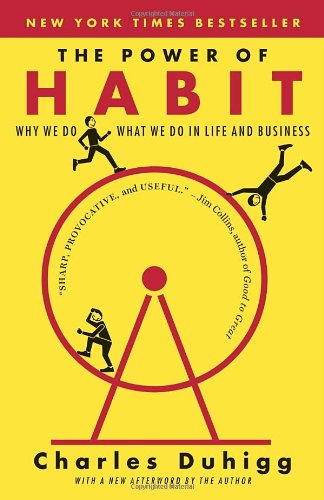
This book was incredibly fascinating.  It will blow your mind in so many ways.  The main premise of the book is that all of us are driven by habits.  Understanding how we form habits can be incredibly useful for individuals and organizations.  The simple formula is:   cue, routine and reward.  There is something here for spiritual development as well.  I wonder how this plays into the formation of spiritual disciplines.  This book is definitely worth reading but be warned that you will be scared of Target by the end of it.

ChristiansArehatefilledHypocrites

Wow…did I love this book!  The theme of the book is this:  Why do evangelicals talk like they are horrible and that the Christian faith is dying when, for the most part, evangelicalism in America is thriving–in fact, growing?  The author, who is a sociologist,  presents what he feels is much more sound research than, for example, Barna’s and shows how evangelicals aren’t walking away from the faith in droves, don’t have the same divorce rate as the rest of the population, and tend to be more generous than most people.  And, he delivers his data in a wickedly funny style.

Overall, the author seemed to be saying, “Don’t listen to Barna and other Christians research organizations who continually deliver doomsday statistics.  They have an agenda and their research is faulty.”  Specifically, he repeatedly went after Barna.  I haven’t exactly sorted out where I land with all of this but it was refreshing to hear a counter argument to the bleak data I’ve been reading for the past few years.  To be honest, his data fits my student ministry experience far better than Barna’s.  Most of our students do very well with their faith beyond high school and I’ve always been baffled by the numbers Barna and others give concerning the number of college students walking away from faith.

simply-christian-cover1I know that my more conservative friends may not appreciate this author but when he talks of kingdom or “life after life after death,” my heart sings.  I still remember when I finally understood that following Jesus means more than saving people for heaven and that heaven is actually a restored earth and God among us.  Sadly, I didn’t see the light on this until after Bible college…let that one sink.  It was this book that opened my eyes:

9780310862413_p0_v1_s260x420

Back to N.T. Wright, regardless of where you fall in the justification debate (nerdy theology alarm!), N.T. Wright has helped to bring balance to our understanding of what it means to follow Jesus here and now.  This book is heady but I appreciated it, especially the latter half.

We’re Hiring!

Hey student ministry type people, my church is hiring two full-time positions.  Both of these positions are part of the student ministry team my friend Jon and I lead.    Here are the job posts:

Female Small Group Coordinator – High School Ministry

Kentwood Campus Middle School Coordinator


If you’re interested, here’s a little background on our church and student ministry…

Ada Bible Church has been around for about 30 years and our senior teaching pastor, Jeff Manion has been leading the church for most of them.  When he began, the church met in a living room and now we are a multi-site church of 10,000.  We are located in Ada, Michigan which is near Grand Rapids.  Feel free to live stream a service  or check out our video archives to get a feel for what we’re about.  Here’s a link.

Our student ministry team of 13 staff is built around collaboration.  We each have our separate areas of expertise and responsibility but whenever possible we work together to create great environments and experiences for our volunteers and students.  More than anything else, our student ministry is focused on small groups.  We believe that the conversations that happen between volunteer leaders and students are the magic sauce of student ministry.  If you’re looking for a strategy of ministry category to put us in, it would be Orange.

If you’re interested in learning a little more about our student ministry, here are two of our websites:

Lifeline Connect

Lifeline Vimeo

We’re looking for new team members who value collaboration, empowering others and excellence in student ministry.  Oh, and we only want people who are fun.  We love what we do and we have a lot of fun doing it together.  If you’re interested or know of someone who would fit well with our team please apply or have that person apply.  I’d also be happy to answer any questions you have through email.

My Favorite Volunteer Celebration Ever

A few weekends ago, our Family Ministry team threw down my favorite volunteer celebration ever.  I still have a perpetual fist pump going.  Look, maybe it’s not the best volunteer celebration in the history of the world but it’s the best one we’ve ever done.  If you’re interested, here’s what we did.

TASTY TREATS

1766958027_23a343e028_m

The first order of business in any great party is food.  Without good food the whole enterprise is in trouble.  I’m just saying.  Our volunteers came into the building and were treated to cheesecake and coffee.  In my book, that’s a win.


CHAOS AND FREE STUFF

After tasty treats, we corralled everyone into one of our auditorium spaces and played a variety of mixers and stage games.  We pitted department against department because we’re competitive like that.  Here’s what we played:

  • Always start with a Raffle…because free stuff is awesome!
  • A mixer called In Room Scavenger Hunt.  Click here for a description.
  • Powerade Flip Out.  It’s the Minute to Win it Game called Stick the Landing except we play four people at once flinging bottles on the same table.  Essentially it turns into madness with players blocking each others shots and throwing each others Powerade across the room .  It’s a riot.  I’m pretty sure we stole the idea from Stuff You Can Use.
  • Head-to-Head Flappy Bird.  Somehow our tech geniuses figured out a way to put two iPads on the projector screen at the same time.  I don’t even know…but it’s amazing.
  • Clumps.  A great mixer with a weird name.  Here’s how to play.
  • Quiz Bowl Time with Andy LoveHandles.  Sorry, this isn’t really duplicate-able.  One of our team members plays a game show character who throws Little Debbie Ding-Dongs at contestants when they get an answer correct.  It’s a little dangerous and a lot hilarious.316814814_219c1f4ed3_q

FUNNY PEOPLE

For the next element, we brought in a local improv group called River City Improv.  They were a huge hit with our volunteers.


MEANINGFUL WORDS

After the improv group, our Senior Pastor of Family Ministries, Brian VanderArk shared a few thoughts about “moments.”  I’ll send you his notes for $500.  Actually, he’ll probably just give them to me if you want them.  The key was, it was short and meaningful.  Volunteers heard, “What I do matters!”


CUTE KIDS

To cap the night, we showed this thank-you video.

Volunteer Celebration: Thank You from LifeLine Student Ministries on Vimeo.


There you have it.  The best volunteer celebration ever.  Feel free to steal any or all of it…except the video.  That would be weird.

How to Get More Volunteers

Recruiting student ministry volunteers can be a little difficult.

“Hey, do you want to be a small group leader?”

“Why would I want to do that?”

“Because you want to give up every Sunday night for the next four years?

“I’m out.”

“Oh, and we’ll need you to give up a few vacation days for camps, retreats and a mission trip or two. Did I mention that you’ll need to have your students over for sleep overs, go to swim meets that last all day and then listen to them process their latest breakup for approximately 10,000 hours?”

“In that case, sign me up!”

The trouble is, we’re absolutely dependent on great leaders.  With great small group leaders we will have a great student ministry–almost guaranteed.  With sub-par leaders or not enough leaders we’ll have minimal impact–even with amazing programming.  So how exactly do we recruit enough great leaders?  Since our student ministry team is entering our recruiting season, I’m in the mood to talk about a few lessons we’ve learned.

Lesson #1 is the power of story.  Let’s talk numbers.  Last spring, our senior teaching pastor invited the people of our church to serve in our student ministry.  He did this from the stage.  Now, our senior pastor is fairly influential.  He has written a few books and is a great preacher.  Every week, around 10,000 people listen to his sermon.  Wanna know how many people signed up to serve?  Five.

Five people signed up to serve when our semi-famous pastor gave a well-crafted and impassioned plea to serve.  5 people.  Ouch.

This year, we adapted our strategy and filmed a video of one of our all-star volunteers–a volunteer who has led the same group of girls for 7 years.  Here’s the video we showed to our church a few weeks ago.  Go ahead and watch it.  I’m going to skip it because I don’t want to cry…again.

My Story: Molly Rayman from LifeLine Student Ministries on Vimeo.


This year, after showing this video, 65 people signed up to serve in our student ministry.  65! I’m not strong at math but that’s pretty close to a million percent increase from last year.  What did we learn?  Story wins.  People resonate with stories.  Everyone wants to be a part of something big and meaningful.  People want to join a cause but aren’t motivated to get up out of their seats until they see it, hear it or experience it through someone’s story.

So, how do you get more volunteers?  Tell stories.  Get your best volunteers on screen on or stage and let them tell the stories of what it’s like to journey with students.  Go ahead and try it but you better create enough positions to accommodate the million percent increase.

God Loves You Too Much To Leave You Where You Are

This past weekend we polished off our Selfie Series which is was all about identity.  I’ll post all the graphics, bumper video and teaching scripts soon if you feel like stealing them.

Selfie_Title

Here’s the video teaching we used in our houses during this series.  It ended up being one of my favorites of the year.

Selfie: Baby Habits from LifeLine Student Ministries on Vimeo.

What have you taught lately that has been awesome?  I’d love to hear about it.