The Power to Speak Future

I’m getting older.  I’ll just come out and say it.  I turn 35 in a couple days.  That’s halfway to 70.  I’m practically dead.

The thing about getting older is that my childhood is slipping from focus.  The details are becoming blurry.  The photos don’t help either, mostly because time has faded them to weird orange/red color.  It’s not just an Instagram filter people.  This is my life.


MEMORIES

The memories that come to me are odd.  I remember my grandmothers.  I remember the smell of one–an overpowering fusion of cigarette smoke and cheap perfume.  I also remember “wooba wooba.”  That was the word I used for my other grandmother’s ginormous flabby upper arms.  I was convinced that she could fly like Dumbo with her wooba wooba if she wanted.

Mostly I remember words, not mundane conversation but the powerful words.  I remember words shouted and whispered–phrases laced with emotion.  I remember a babysitter calling me a “little s***” because I peed the bed.  I remember an elementary school teacher announcing to my class that my life’s destiny was to be a “Lazy-Boy sofa tester.”  Apparently she wasn’t terribly impressed with my work ethic.  I remember a strange new sensation that flooded me the first time a girl told me I was cute.  I remember being called a “horse’s a**” for not doing something properly and I remember when my dad told me he was proud of me.  I remember the words.  I bet you do too.  The scenes are blurry.  The names escape me but the words and the faces that spoke them are as clear as yesterday.


WORDS

There is a spiritual power in words.  According to the Genesis narrative God spoke the world into being.  With words he created a future.

If it is true that we are created in God’s image then it makes sense that our words are powerful as well.  With our words we can create a future.

Whether you realize it or not, words have shaped your future.  When you were young, the people around you molded you with their words.  You learned to trust or to fear through words.  Words told you whether you are beautiful or ugly.  You learned that you are talented or worthless.  You learned that you can or cannot.  Words created your future.

“The tongue has the power of life and death” (Proverbs 18:21)

In fact, for years words have been breathing life into you.  Or, they’ve been killing you.  Words make you alive to who you truly are, to your talents, passions and dreams.  Words give you the sustenance to push on.  They create security, love and peace.  Or, words sabotage your identity, talents, passions and dreams.  Words crush your spirit and steal your will.  They create fear, mistrust and chaos.

Do you see how powerful words are?  There is a reason why we remember words.  It’s because they shaped and continue to shape us.  Words create future.


SPEAK

Each of us has been gifted with a tremendous power.  Words.  Regardless of what has been spoken to you, you have a choice in how you will speak.  The words you speak have the power to shape your child’s self-concept.  Your words will impact your friend’s future.  Your words will affect the culture of your marriage 5 years from now.  You have been gifted with the power to create future.  How will you speak?

 

How I Know I’m a Horrible Person

I don’t know about you but I felt great when I woke up this morning.  I felt amazing.  I just felt so comfortable in my own skin–just being me.  I was on top of the world, singing loudly in the shower like I didn’t have a care in the world.

And then I got in my car to drive to work.  I pulled up to a red light and looked to my left.  There, purring like a kitten tiger was a beautiful and expensive sports car.  It was gorgeous–so sleek and shiny.  I gazed longingly at all the fancy tech gadgets and luxury through the tinted windows.  Then the light turned green and that car flashed away like an angry rocket–screaming along with an intoxicatingly powerful roar.

That’s when I noticed the vastly different sound spilling feebly from my own car.  It was more like a death rattle than anything. And then I remembered how my car is about a hundred years old and how one entire panel is rusted, how my window and air conditioning are broken and how I have a tape deck.  A tape deck.  That’s technology from the 80s.  They don’t even make tapes anymore!

And suddenly, I’m not feeling so great about myself.  I’m not so comfortable in my own skin.  I’m not on top of the world in fact I’m feeling rather under it.  I start to feel sort of worthless and disgruntled.  I pound on my decrepit steering wheel.  Why can’t I have a car like that?  Why do I always have to drive around in a piece of junk car?  My life sucks.

It’s then that I pull up to the next stop light.  I look to my left and I see this car–an absolute disaster of an automobile.  A condescending chuckle erupts out of me.  Oh my!  What a piece of junk.  WOW do I feel bad for the person who drives that car.  I would hate myself.  There is no way I would drive that car.  How embarrassing.  I wouldn’t be caught dead in that thing.

And suddenly, I feel pretty good about myself.  I’m feeling pretty comfortable in my own skin.   I’m glad I ‘m not that guy.  His life must suck.

Sound familiar?  Maybe it isn’t cars but I bet you’ve done the same thing about clothes, your house or grades.  I might not be rich but at least I don’t live there!


AM I OK?

What are we doing in these moments of comparison?  Why do we do this?  I think it’s because lodged deep within each of us is a voice telling us that we aren’t OK.  There is a voice, sometimes quiet and sometimes screaming that tells us that we aren’t valuable.  And so, we look around at the people around us and ask, “Am I OK?”  When I look at his car I feel terrible.  When I look at her jeans I feel great!  And why, when something bad happens to him do I secretly celebrate?  This is when I know there is something horribly wrong with me.  There is a part of me deep inside that is broken.

This voice reflects the brokenness inside of us and I believe it reflects a broken relationship between us and our creator.  A toxicity pervades our minds and relationships.

This might sound strange but I find this brokenness in all of us to be one of the most compelling arguments for Christianity.  I don’t believe that any other worldview explains as clearly why we envy, compare ourselves to other people and why we constantly battle a little voice in our heads that tells us we are terrible people.  We’re broken people in need of repair.  There’s no self-help or enlightened path that can fix this.


image credited to Dan Iggers via Flickr

Why Small Groups Aren’t Enough

I recently realized that small groups in our student ministry aren’t working.  I found this insight surprising because I’m a huge fan of small groups.  In fact, I spent the last 5 years as the small groups pastor of our high school ministry.  I’m still a huge proponent of small groups but I’ve realized that they aren’t enough.  Unless these groups lead to something deeper we aren’t giving our student what they truly need.

What I’ve learned over the last decade of ministry is that in a culture that is largely void of adult support and care what our students need more than anything is mentors.  Our students need caring adults to show them how to live and follow Jesus.  They need a constant force of love, support and coaching.  That is what a mentor does.   I still believe that small groups are important but only if they lead to mentoring.

Perhaps the most important benefit of a mentor is that the mentoring relationship continues after students graduate out of our ministries.  I am convinced that long-term mentoring relationships are the most important thing we can offer a student.  So how do we facilitate mentoring?  The good news is that if your student ministry is based on small groups you already possess the framework for mentoring relationships.  Here are some thoughts on transforming your small group ministry into a mentoring ministry.


GET OUTSIDE

If a small group only exists within the walls of the church building or the home in which they meet then I would argue that it’s not mentoring.  Mentoring takes place within the normal contexts of life. Mentoring happens when a caring adult invites a student into his or her life.  Mentoring happens when adults invade the turf of students.  So, if we want to see mentoring in our student ministries then we must literally get into the lives and students and invite them into ours.  And, we must equip and train our volunteers to do the same.


RECRUIT DIFFERENTLY

A mentoring based student ministry requires that we make a shift in volunteer recruiting.  For the first half of my career I concentrated on recruiting the coolest, youngest, most relevant volunteers I could find.  My thinking was that I needed volunteers who would attract students and relate well to them.  While I still think that relevance is important and cool is extraordinarily helpful, there is only so much mentoring a young, hip college student can offer a high school student.  Mentoring requires experience.  I now believe we ought to recruit volunteers who have life experience because they possess more of the tools required of a mentor.  I want a volunteer who has the wisdom and life experience necessary to address some of the heavier issues facing teens.

Mentoring, at it’s most basic level is this: “Watch what I do and do it.”  Because of this we also need volunteers whose lives that are worth copying.  We need people of character and strong faith.  Character and life experience trump age and coolness.


RESTRUCTURE

A volunteer only has so much time in a week.  If you’re already asking your volunteers for two events a week (youth group night and small groups night) you may need to restructure your ministry.  I believe that the best strategy is to attach small groups to your large group programming and cut the extra night of programming.  This way all of your students get plugged into small groups and secondly, it frees your volunteers up for mentoring outside of the ministry structure.  I truly believe that outside mentoring is more valuable than another night of programming.  Feel free to disagree.


CHANGE YOUR FOCUS

How many students can one person mentor?  Truthfully, it’s probably around 3 or 4.  This means that we need more volunteers!  It also means that youth pastors needs to change their focus.  Mentoring is simple and yet terribly draining.  Mentors are constantly pouring themselves out so they need someone to pour into them.  I would argue that the role of a youth pastor needs to shift toward caring for and mentoring mentors.  If the best thing our student ministries can offer a student is a long-term mentor then the primary role of the youth pastor may need to shift toward recruiting, training and encouraging godly mentors.


It’s my belief that small groups aren’t working anymore because students desperately need adult mentors.  I’d love to hear your thoughts on this especially if you’ve found success in promoting mentoring relationships in your student ministry.


image credited to Matt Peoples via Flickr

Why I Lie

I know a family who recently adopted a little girl from an impoverished nation in Africa.  The girl has been living with her adopted family for several years and has been functioning quite well except for one area.  You see, this little girl barely survived her first few years in Africa.  She was alone living on the streets–starving.  She would wait in line for days to be served a meager ration.  Food was the one thing that was constantly on her mind.  She barely survived and was always hungry–ravenously hungry.

Thankfully she was adopted by an American family who has provided her with love and plenty of food ever since.  But, she can’t seem to shake her old habits concerning food.  Her parents have found that she eats everything.  She will take seconds and thirds and eat until she nearly bursts.  At school, she will ask to visit the restroom and instead she will slip into the communal cubby area where all the kids keep their backpacks, coats and boots.  There she systematically opens each backpack and rifles through each lunch box eating everything she can until she is caught.  Although most of her other social behaviors would go by unnoticed she will eat, steal and hoard food at every opportunity.  Why?  She is fighting to survive.  Her little mind convinces her that she must eat.  She needs to eat.  Her very life depends on it.

Her body is with a loving family who has plenty here in America but in her mind she is still a starving child living on the streets in Africa.  Her mind hasn’t caught up with her present reality.  She isn’t alone anymore.  She is deeply loved and cared for.  This is her new reality.  Her mind just hasn’t embraced it yet.


CATCHING UP WITH REALITY

I do this same exact thing and my suspicion is that you do too.  So much of what I do is designed to win your approval–to convince you that I am valuable. The jokes I make, the stories I tell and the clothes I wear are chosen to impress because I have a fierce need to be accepted and valued…and so do you.

My problem is that I haven’t embraced my present reality.  Like the hungry little girl, I was an orphan and so were you..  Not in an physical sense but spiritually.  You see, we are designed to find our belonging and value in a close relationship with our Creator and Father.  When this relationship is estranged it is impossible for us to function as whole people.  The brokenness within us will drive us to behaviors that don’t make sense–like eating everything in sight or in my case being funny, buying a pair of jeans I can’t afford or stretching the truth in a story to make myself look a little more impressive to you.  I do this because I don’t feel like I belong.  I don’t feel like I am loved.

ADOPTED

I love that the Apostle Paul described our new relationship with God through Jesus as adoption.

But when the right time came, God sent his Son, born of a woman, subject to the law.  God sent him to buy freedom for us who were slaves to the law, so that he could adopt us as his very own children.  And because we are his children, God has sent the Spirit of his Son into our hearts, prompting us to call out, “Abba, Father.”  Now you are no longer a slave but God’s own child.  And since you are his child, God has made you his heir. (Galatians 4:4-6)

I can’t help but think that God looks at our behavior the same way that we look at the starving little girl–with pity and sadness.  Don’t you realize that you don’t have to act that way anymore?  You don’t have to lie.  You don’t have to sleep with him.  You don’t have to run to that addiction.  Don’t you know that you are loved?  Don’t you know that you are mine?  Who cares what everyone else thinks?  I love you.

I have a new reality.  I am accepted and loved.  I’ve been granted the privilege to call the Creator God, “Dad.”  No offense but I’m going to stop caring about what you think of me.  I don’t need to be funny, stretch the truth or dress a certain way to gain your approval because I don’t need it.  I have the approval of my Father.  I choose to believe my present reality and I invite you to do the same.


image credited to Even Earwicker via http://www.sxc.hu/

Free Teaching Series

Who doesn’t love free stuff?  Especially when that free stuff involves doing less work?

We recently did a teaching series called Gravity that I loved.  It’s a series about boundaries.  In the series we taught on boundaries with sexuality, media, friends and time.  In my opinion, the series was awesome enough that you should use it in your student ministry.

Here’s the title package…


While we’re at it, here are all the teaching scripts…

The Law of Magnets

The Law of Screens

The Law of Glue

The Law of Robots


And here’s a link to title slides, blank slides, and the title package.


Feel free to borrow/steal this material and let me know if you found it helpful.


January Book Reviews

The first month of 2014 is already over and here in Michigan it’s been the snowpocalypse.  Maybe that’s why I’ve been reading so much.  Here’s what I polished off this month…

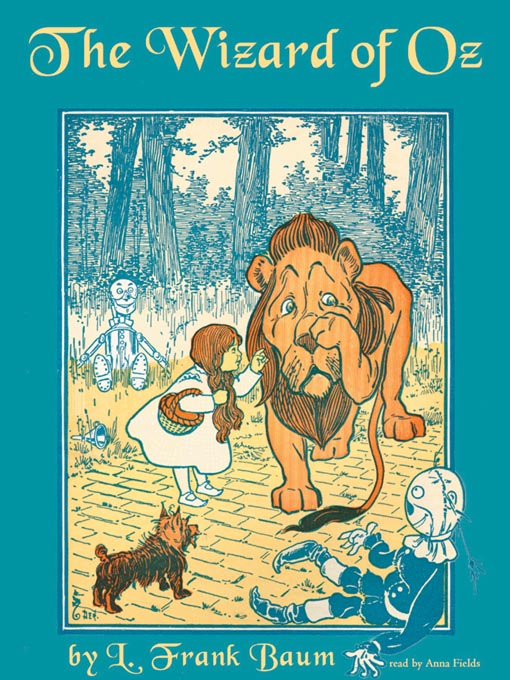
wizard-of-ozI read to my kids nearly every night because I want them to love books and because I believe that reading to them will build a sense of adventure and a thirst for knowledge.  It took us a long time to work through this classic but they loved it.

north-or-be-eaten-250

I started this series because I was considering reading it to my kids.  I think it’s a little too scary for my younger kids but as it turns out I love the series!  Maybe it says something about my maturity level…or maybe that the books are great!  I’m looking forward to continuing the series.

made in america

I’ve written before about my love of Bill Bryson.  I don’t always agree with his viewpoints but his writing style and humor are fantastic.  I enjoyed this book in particular because it’s about the history of the English language in the United States.  The book is full of little stories explaining the odd phrases that we use without knowing where we got them.

I’m obsessed with history and I love literature and writing so Made in America was a perfect fit.  I know, I know, the topic probably sounds boring but I was constantly laughing.  It’s was highly entertaining.

mourik-web1


I just finished this book and I’m still processing it.  This was a much heavier read than the other books I read this month–in a lot of ways.  I picked it up because I love the outdoors and also a gritty story of struggle.  The book definitely delivered in both categories.  I couldn’t put it down.

What I didn’t love was the crassness.  It was dirty to the degree that I can’t really recommend it which is disappointing because Cheryl Strayed is a incredibly expressive writer.  She conveys emotion and pain wonderfully.

So, what are you reading?  I’d love to hear of any reading recommendations you have.

Salsa Dancing and Pain

In my early 20s I was under the illusion that parenting would be easy.  You feed them, change them and put them to bed.  Game over.  I was ready to start a family about 6 weeks after my wedding.  Thankfully my wife being far more sensible, convinced me to wait for a few years.  Parenting, as it turns out has been astronomically difficult.  No other role in my life has so dramatically attacked my inherent selfishness.  I learn new things about myself and what it means to be human nearly every day.  For example, I recently learned that my kids are vastly different from each other.  I was sort of under the impression that parenting one kid would be remarkably like parenting another.  How wrong I was.  For the sake of illustration, let’s talk about how each of my kids handles pain.

My oldest son is easiest for me to understand because he’s like me.  He cares immensely about what people think of him.  When he gets hurt he’s going to play tough because he’s concerned about your impression of his ability to handle pain.  Just the other day he was doing an impersonation of El Macho’s salsa dancing from Despicable Me 2 (a scene worthy of another blog post) when he bashed his shoulder into the kitchen counter.  He hesitated but carried out his salsa maneuvers like a champ.  When it comes to pain, my oldest is going to play tough.  In responding to his pain it’s best to tell him how tough he is and sort of move on.

My oldest daughter could not be more opposite.  For her, there is no way to tell the difference between a stubbed toe and a severed leg.  The screaming will be the same in each situation.  She is dramatic and emotional to degrees I’ve never ever heard of.  The best way I’ve found to respond to her is to simply hold her for a very long time and then we’ll still probably have to talk about what happened for hours…girls.

My youngest son is very peculiar in his approach to pain.  The kids and I will be wrestling in the living room and I’ll look around for him and he’ll be gone.  Somehow, in the midst of pillow projectiles and children being catapulted onto various couches, Jack got “bonked” on the head and disappeared behind the couch.  Though he’s hiding, he isn’t crying and if you try to pick him up for a hug him he will yell and squirm.  When hurt he doesn’t want to be noticed or coddled.  He wants space.  He’s rather like me at my birthday dinner.  If a waitress so much as sings a note of “Happy Birthday” she will get a french fry to the eye.

My youngest daughter is a fireball.  Although only 1 she has her own way of handling pain.  Just yesterday she tried to kiss her baby doll and the plastic face was a little too hard on the lips so she screamed and launched the baby across the room.  When hurt, my daughter is likely to punch you, bite you or throw something at you.  It doesn’t matter if it was your fault or not.  She’s like a hornet’s nest.  The closest person is gonna get it!

So there you have it.  4 kids with 4 entirely different approaches to handling pain.  And this is just one issue.  As it turns out parenting one kid is rather unlike parenting another.  It’s not easy and it takes far more strategy than I originally supposed.  I’m learning that I must customize my approach to each of my kids.  And yet, I love it.  Each one of them is a unique mystery full of possibility, challenge and promise.  I can’t wait to see how each of their individualism emerges to tackle the world.


image credited to whatumean

Practices that Promote Lifelong Faith

Recently I was asked to describe our student ministry’s strategy for helping students develop faith beyond high school.  This is one of my life’s passions so I’m glad to share.  Yesterday I blogged about what I believe is the culture necessary for promoting faith beyond high school.  You can read the post here.

Today I’m writing about the specific practices we employ to help our students’ faith stand in life beyond our student ministry.  Here they are:


Preparation

Students are often ambushed by the complexity of life after high school.  One of the best ways we can help our students is through education and conversation.  We created a supplemental curriculum for our seniors that covers topics like these:

  • Calling
  • Money and Debt
  • God’s Will
  • How to pick the right college and major
  • How to be awesome at being married

We use two books as well.  I developed a few teachings from Andy Stanley’s The Principle of the Path and we build the entire first semester around Donald Miller’s Storyline.  I find the concepts in these books to be extremely helpful for seniors.  The main point is that we gather ours seniors regularly and talk specifically about the transition they are entering.  By doing this we also retain our seniors very well because, well…they don’t have to hang out with freshmen.  And, the topics are relevant to where they are at.

Capstone

Every year we invite our seniors on a retreat we call senior sneak.  This event is designed to challenge and equip our students to continue pursuing Jesus in life after high school.  It’s also an incredible bonding experience for our students and their mentors.  Our goal is to cement these relationship because the students will need their mentors in the year to come.

This event is also our most extravagant event.  We spend a little extra money to provide our students with a special experiences.  It’s another way for us to retain our upperclassmen.  We’ve built enough buzz over this event through the years that most of our students really look forward to the experience.

Hand Off

We have sworn off the graduation cliff.  A handshake and a graduation book isn’t good enough.  We believe that it’s our responsibility to connect our students with a new ministry or church and to check in on them.  We also vision and train our volunteer mentors to maintain relationships with their students for at least the first year of college.  Often, these relationship become lifelong friendships.

Support

One of the simplest and most effective things we do is send a care package to our graduates during their first month of college.  The first semester of college is incredibly disorienting.  Our goal is to remind our graduates that we still care about them and that they still belong.  We send them food, LifeLine gear, a Starbucks card, digital bible studies and letters from volunteers and staff.  The feedback we get from these packages is incredible.

In addition to the care packages, we assign one of our staff members to support our graduates throughout the year with regular text messages, and social media check ins.  It’s a small time commitment that pays incredible dividends in encouragement.

Reconnect

The last thing we do is invite our graduates to two different events during their first year of college.  The first is a reunion event for all graduates and their small group leaders.  The goal of this event is to first remind our graduates that we still care about them and their faith development and second to reconnect graduates with their mentors.  This relationship is the most important thing we can offer them.

The other event is a special night at our senior gathering where graduates come and share about what they’ve learned in life beyond high school.  They offer advice to our current seniors and answer questions about what college is really like.  This is a huge win for both our graduates and our current seniors.


So there are some of the practices that we employ to help promote lifelong faith in our students.  I hope you found something helpful.  I’d love to hear some of your genius ideas as well.


image credited to Xiaobo Song